Your Living Room Deserves a Glow-Up
Walk into a beautifully designed living room and you instantly feel something. Maybe it’s warmth. Maybe it’s calm. Maybe it’s pure wow. That feeling doesn’t happen by accident — it comes from smart, intentional living room interior design.
Your living room is the heart of your home. It’s where you relax after a long day, host friends, binge your favorite shows, and spend time with family. So it makes sense to put real thought into how it looks and feels.
The good news? You don’t need a huge budget or a professional designer to make your living room look amazing. You just need the right ideas, a clear vision, and a little inspiration.
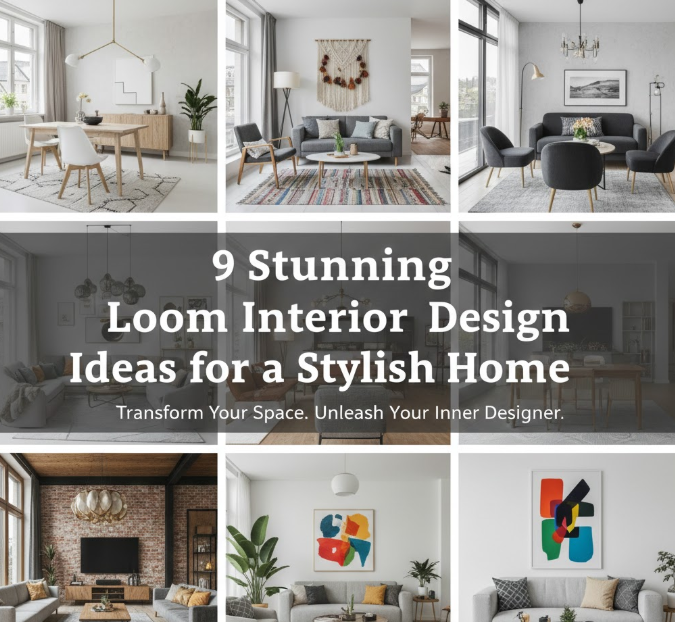
In this article, we’re going to walk you through 9 stunning living room interior design ideas that can completely transform your space. Whether you love clean modern lines, cozy rustic vibes, or bold maximalist styles, there’s something here for every taste and budget.
Let’s dive in.
1. Go Bold With a Statement Wall
One of the fastest ways to upgrade your living room interior design is by creating a statement wall. This is one single wall that stands out from the rest — and it completely changes the energy of the room.
What Makes a Great Statement Wall?
A statement wall can be:
- A deep, rich paint color like navy blue, forest green, or terracotta
- Textured wallpaper with a bold pattern
- A gallery wall filled with framed art, photos, or mirrors
- Wood paneling or shiplap for a warm, natural feel
- A large mural or hand-painted design
The key is contrast. If the rest of your walls are white or neutral, a single dark or patterned wall creates instant drama without overwhelming the room.
How to Pull It Off
Choose the wall behind your sofa or fireplace — these are natural focal points. Keep the rest of the décor simple so the wall gets all the attention. Use lighting (like a sconce or picture light) to highlight it even more.
Pro Tip: Deep green and terracotta are two of the most popular statement wall colors right now. They add sophistication without feeling too trendy.
2. Layer Your Lighting Like a Pro
Most people just flip on the overhead light and call it a day. But lighting is one of the most powerful tools in living room design — and layering it properly can make your room feel like something out of a magazine.
The Three Layers of Living Room Lighting
| Layer | Type | Example |
|---|---|---|
| Ambient | General, overall light | Ceiling fixture, recessed lights |
| Task | Focused light for activities | Floor lamp, table lamp |
| Accent | Decorative, mood-setting | LED strips, sconces, candles |
When you combine all three layers, you get a living room that can shift from bright and functional during the day to soft and cozy at night — just by adjusting which lights are on.
Easy Lighting Upgrades
You don’t need to rewire your house. Start with:
- A stylish floor lamp in the corner
- Table lamps on either side of the sofa
- LED candles or string lights for warmth
- A dimmer switch for your main ceiling light
Warm-toned bulbs (2700K–3000K) always feel more inviting than cool white ones in a living room.
3. Choose a Sofa That Works Hard and Looks Great
Your sofa is the anchor of your living room. It’s usually the biggest piece of furniture, and everything else in the room gets arranged around it. So getting the sofa right is a huge part of nailing your living room interior design.
Sofa Styles That Are Trending Right Now
Mid-century modern: Clean legs, low profile, simple lines. Looks great in neutral colors like camel, cream, or olive.
Sectional: Perfect for large families or people who love to lounge. Great for L-shaped living rooms.
Chesterfield: Tufted, rolled arms, classic look. Adds instant elegance and old-school charm.
Modular: Flexible and customizable. You can rearrange pieces to change the layout whenever you want.
Sofa Color Tips
- Neutral shades (gray, beige, cream) are the safest and most versatile
- Bold colors (deep blue, burnt orange, emerald green) make a statement but need careful coordination
- Patterns can add personality, but keep the rest of the room calm to avoid visual clutter
Always measure your room before buying. A sofa that’s too big makes a room feel cramped. A sofa that’s too small looks lost.
4. Bring the Outdoors In With Plants and Natural Elements
Nature has a way of making spaces feel calm, fresh, and alive. Adding plants and natural materials to your living room is one of the easiest and most affordable living room décor upgrades you can make.
Best Plants for a Living Room
| Plant | Light Needed | Maintenance Level |
|---|---|---|
| Pothos | Low to medium | Very easy |
| Snake Plant | Low | Very easy |
| Fiddle Leaf Fig | Bright indirect | Moderate |
| ZZ Plant | Low | Very easy |
| Monstera | Medium to bright | Easy |
Even if you don’t have a green thumb, there are tons of low-maintenance options that look incredible.
Beyond Plants: Other Natural Elements
Plants aren’t the only way to bring nature inside. Try:
- Wooden furniture or décor accents
- Jute, rattan, or wicker baskets and light fixtures
- Stone or marble coffee tables or trays
- Linen or cotton throw pillows and curtains
- Driftwood or branches as decorative pieces
The goal is to create a space that feels grounded and organic. Natural textures add warmth that no synthetic material can fully replicate.
5. Master the Art of Mixing Textures
Here’s a secret that interior designers use all the time: texture is what separates a flat, boring room from one that feels rich and layered. When it comes to living room interior design, mixing textures is a game-changer.
What Does “Mixing Textures” Mean?
It means combining different materials and surfaces so the room feels visually interesting. Think:
- A velvet sofa + a chunky knit throw blanket
- A smooth marble coffee table + a rough jute rug
- Glossy ceramic vases + a matte linen curtain
- A sleek wooden shelf + fluffy decorative pillows
You’re not trying to match everything — you’re trying to create contrast. That contrast is what makes a room feel curated and intentional.
The Texture Rule of Three
A simple trick: aim for at least three different textures in your main seating area. For example:
- Soft — throw pillows, blankets, rugs
- Smooth — glass, polished wood, metal accents
- Rough — wicker, stone, exposed brick, linen
This combination gives the eye plenty to explore without overwhelming the space.
6. Pick a Color Palette That Tells a Story
Color is emotional. It affects how you feel the moment you walk into a room. That’s why your color choices are one of the most important decisions in any living room interior design project.
Popular Living Room Color Palettes in 2024–2025
Warm Neutrals (Timeless & Cozy) Shades like warm white, sand, caramel, and soft terracotta. These work in almost any style and never go out of fashion.
Earth Tones (Natural & Grounded) Olive green, rust, clay, and deep brown. Perfect for biophilic or rustic-inspired spaces.
Cool & Calm (Modern & Sophisticated) Soft gray, dusty blue, sage green, and off-white. Great for contemporary or Scandinavian-style rooms.
Bold & Dramatic (Maximalist & Confident) Deep teal, navy, forest green, or charcoal. Use these on walls or large furniture pieces for big impact.
How to Build Your Palette
Use the 60-30-10 rule:
- 60% — Your dominant color (walls, large furniture)
- 30% — Your secondary color (curtains, rugs, accent chairs)
- 10% — Your accent color (pillows, décor, art)
This formula keeps things balanced so no single color takes over.
7. Arrange Your Furniture for Flow and Function
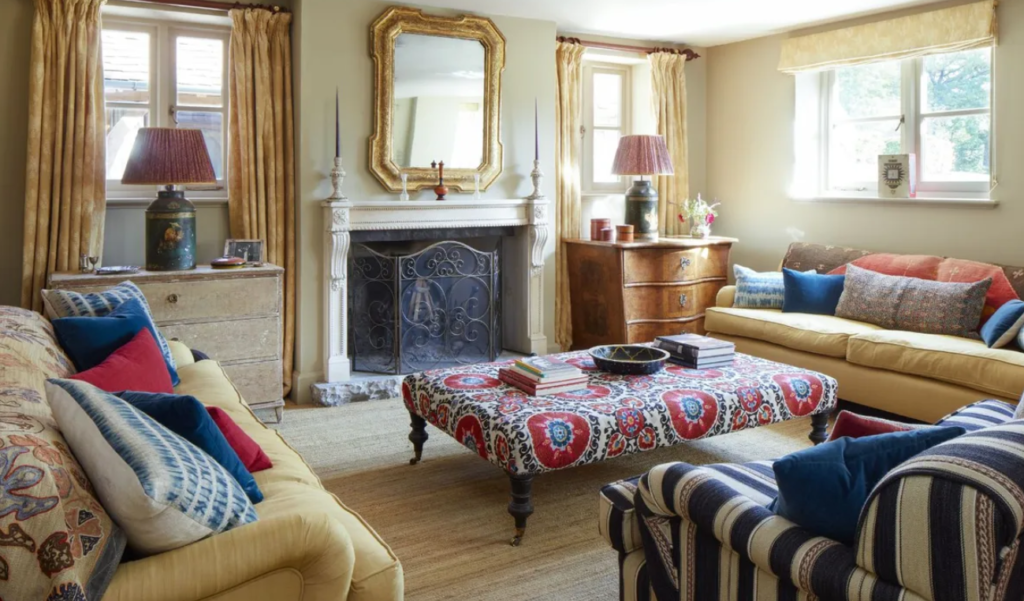
Even the most beautiful furniture can ruin a room if it’s arranged poorly. Smart furniture arrangement is a core part of great living room interior design — and it’s something a lot of people overlook.
Common Furniture Arrangement Mistakes
- Pushing all the furniture against the walls (makes the room feel like a waiting room)
- Blocking natural pathways through the room
- Facing the TV instead of the conversation area
- Using too many large pieces that crowd the space
Rules for a Better Layout
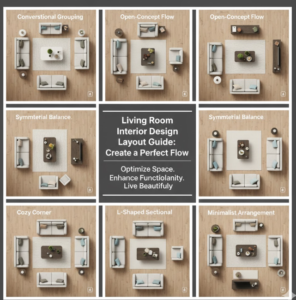
Create a conversation zone. Arrange your sofa and chairs so people can comfortably talk to each other. Aim for seats to be no more than 8 feet apart.
Float your furniture. Pull the sofa a few inches away from the wall. This instantly makes the room feel more intentional and designed.
Use a rug to anchor the space. Place a large rug under the coffee table and front legs of the sofa. This ties the seating area together visually.
Leave breathing room. Keep at least 18 inches of walkway between pieces of furniture. This makes movement natural and easy.
For more expert layout tips and real-home inspiration, check out Inspirations for Interiors — a great resource for practical and beautiful design ideas.
8. Add Personality With Art and Décor
Here’s where your living room goes from “nice” to “this is so you.” Art and decorative accessories are the final layer in any living room interior design — and they’re what give a space its personality and soul.
How to Hang Art the Right Way
- Hang art so the center of the piece is at eye level — about 57–60 inches from the floor
- For a gallery wall, lay out the arrangement on the floor first before putting holes in the wall
- Mix sizes and frame styles for an eclectic, collected feel
- Keep spacing consistent — about 2–3 inches between frames
Décor Accessories That Elevate a Room
Coffee table styling: Use a tray to group smaller items (candles, books, a small plant). This keeps things organized but intentional.
Bookshelf styling: Alternate between books, plants, and decorative objects. Face some books outward to show their covers.
Throw pillows: Odd numbers (3 or 5) tend to look more natural than even numbers. Mix sizes and textures.
Mirrors: A large mirror reflects light and makes the room feel bigger. Place one opposite a window for maximum effect.
According to Architectural Digest, one of the biggest décor mistakes people make is buying everything from the same store at the same time. The rooms that feel most personal are built slowly, with pieces collected over time.
9. Define Your Style and Stick to It
The final — and maybe most important — idea in this list isn’t about a single design element. It’s about having a clear vision. The best living room interior design always has a consistent style that ties everything together.
Popular Living Room Design Styles at a Glance
| Style | Key Features | Best For |
|---|---|---|
| Modern | Clean lines, minimal clutter, neutral colors | Urban apartments, sleek aesthetics |
| Scandinavian | Light woods, white walls, cozy textiles | Small spaces, minimalists |
| Bohemian | Layered patterns, plants, eclectic mix | Creative personalities |
| Industrial | Exposed brick, metal, dark tones | Loft spaces, bold personalities |
| Traditional | Symmetry, classic furniture, rich colors | Formal homes, classic tastes |
| Coastal | Light blues, natural textures, airy feel | Beach vibes, relaxed spaces |
| Farmhouse | Shiplap, neutrals, rustic wood | Cozy homes, country aesthetics |
How to Figure Out Your Style
Browse design accounts on Pinterest or Instagram. Save the images that make you stop and stare. After 20–30 saves, you’ll start to notice a pattern — that pattern is your style.
Once you know it, every purchase becomes easier. You’ll have a filter for deciding whether something belongs in your space or not.
Quick Reference: Living Room Design Checklist
Here’s a handy checklist to make sure you’ve covered all the key areas of your living room interior design:
| Element | Done? | Notes |
|---|---|---|
| Statement wall or focal point | ☐ | |
| Layered lighting (3 types) | ☐ | |
| Right-sized sofa | ☐ | |
| Plants or natural elements | ☐ | |
| Mixed textures | ☐ | |
| Cohesive color palette | ☐ | |
| Smart furniture arrangement | ☐ | |
| Art and accessories | ☐ | |
| Defined design style | ☐ |
FAQs About Living Room Interior Design
Q: What is the most important element in living room interior design? A: Furniture layout is often the most impactful element because it affects how the room functions every single day. But lighting comes in as a very close second — it sets the entire mood of the space.
Q: How do I make my living room look more expensive on a budget? A: Focus on a few high-impact changes: add a large area rug, invest in one quality throw pillow set, hang curtains close to the ceiling (this makes ceilings look higher), and declutter aggressively. A clean, curated space always looks more intentional — and more expensive.
Q: What colors make a living room look bigger? A: Light, cool colors like soft white, pale gray, and light blue make a room feel more open and airy. Mirrors and proper lighting also help create the illusion of space.
Q: How many throw pillows should I have on a sofa? A: It depends on sofa size, but generally 3–5 pillows work well. Mix sizes — start with two large pillows at the back, two medium in front, and one small lumbar pillow in the center.
Q: What’s the best rug size for a living room? A: For most living rooms, an 8×10 or 9×12 rug works best. It should be large enough to fit under the front legs of all the major seating pieces. Going too small is one of the most common — and most noticeable — decorating mistakes.
Q: Should my living room furniture match? A: Not necessarily. Perfectly matching sets can look stiff and staged. Instead, aim for coordination — pieces that share similar tones, materials, or style cues. A mix of complementary pieces almost always looks more interesting and personal.
Q: How often should I redecorate my living room? A: There’s no fixed rule, but a refresh every 3–5 years keeps things feeling current. You don’t have to start from scratch — sometimes swapping out pillows, rugs, or artwork is enough to completely change the feel of a room.
Wrapping It All Up
Transforming your living room doesn’t have to be overwhelming. As you’ve seen throughout this guide, great living room interior design comes down to a series of intentional choices — the right colors, smart lighting, quality furniture, personal touches, and a style that reflects who you are.
Start small if you need to. Pick one idea from this list and run with it. Maybe that’s painting a statement wall this weekend. Maybe it’s rearranging your furniture to create a better conversation zone. Maybe it’s finally adding that floor lamp you’ve been eyeing.
Every small change adds up. And over time, those changes combine into a living room that genuinely feels like home — one that you’re proud to show off and love to spend time in.
The most stylish living rooms aren’t the ones with the biggest budgets. They’re the ones built with the most intention. Now go make yours one of them.