Your Small Living Room Has More Potential Than You Think
A small living room can feel like a puzzle. You want it to look stylish, feel comfortable, and actually work for your daily life — but the space just doesn’t seem to cooperate. Sound familiar?
Here’s the good news: living room interior design for small spaces isn’t about fitting less into a room. It’s about making smarter choices. The right furniture, the right colors, and the right layout can completely transform how a room looks and feels — even without knocking down a single wall.
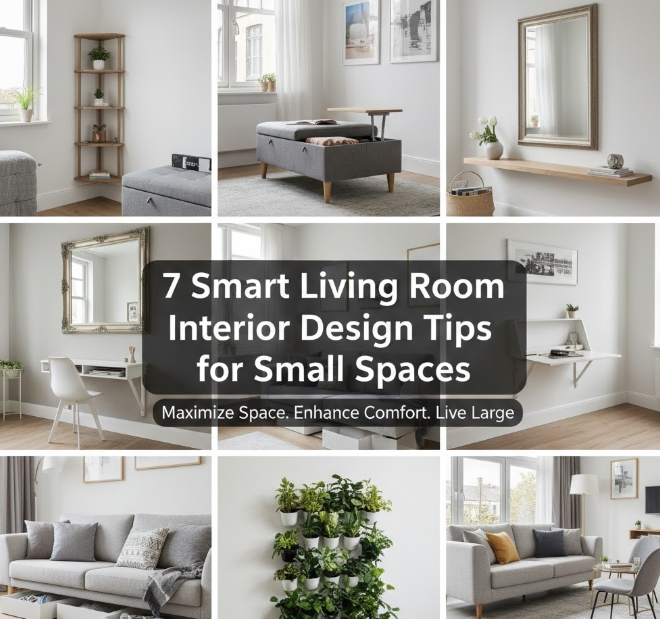
In this article, you’ll find 7 practical, proven tips that help you design a small living room that feels bigger, brighter, and way more functional. Whether you’re decorating a studio apartment, a cozy townhouse, or just a compact room in your home, these ideas will work for you.
Let’s get into it.
Why Small Living Room Design Is a Different Challenge
Designing a small space isn’t just “regular design but smaller.” It comes with its own set of challenges that need specific solutions.
When a room is tight on square footage, every single decision matters more. A bulky sofa can eat up half the room. Dark paint can make walls feel like they’re closing in. Too many accessories can turn a small space into a cluttered mess fast.
But here’s the flip side — small rooms are actually easier to make feel cozy and intentional. You have fewer surfaces to style, fewer walls to fill, and fewer corners to worry about. With the right approach to living room interior design, a small space can end up looking more polished than a big one.
The key is knowing which rules to follow and which ones to break.
Tip 1: Choose Furniture That Works Double Duty
Stop Buying One-Purpose Pieces
In a small living room, every piece of furniture needs to earn its spot. If something only does one job, think twice before buying it.
Instead, look for furniture that multitasks. A storage ottoman, for example, works as a footrest, a coffee table, and a hidden storage unit all at once. A sleeper sofa gives you a couch by day and a guest bed by night. A console table behind the sofa can act as a desk or a display shelf.
This approach is one of the smartest moves in small-space living room interior design because it cuts down on clutter while keeping the room fully functional.
What to Look For When Buying Multi-Use Furniture
| Furniture Type | Primary Use | Secondary Use |
|---|---|---|
| Storage Ottoman | Footrest / Seat | Blanket or book storage |
| Sleeper Sofa | Seating | Guest sleeping area |
| Lift-Top Coffee Table | Surface space | Hidden storage inside |
| Nesting Tables | Side tables | Tuck away when not in use |
| Bookshelf with Bench | Storage | Extra seating |
Scale Matters More Than You Think
Also, pay attention to scale. Big furniture in a small room looks awkward and takes up visual space. Go for pieces with slim profiles, raised legs (which let you see more floor), and simple shapes. Furniture with visible floor space beneath it makes the room feel less heavy and more open.
Tip 2: Use Light Colors to Open Up the Room
The Science Behind Color and Space
Color has a direct effect on how large or small a room feels. Light colors — whites, soft grays, pale blues, warm creams — reflect natural light and make walls feel farther apart. Dark colors absorb light and visually pull walls closer together.
This is one of the most well-known principles in living room interior design, and it works every single time.
If you’re working with a small room, painting walls in a light, neutral shade is one of the fastest and most affordable upgrades you can make.
Go Monochromatic for Maximum Impact
A monochromatic color scheme means using different shades of the same color throughout the room. For example, soft white walls, a cream-colored sofa, a light beige rug, and ivory curtains.
When the eye doesn’t have to jump between many different colors, the room feels calmer and more spacious. Contrast draws attention. Harmony expands space.
That said, monochromatic doesn’t have to mean boring. You can add texture through pillows, throws, and rugs to keep things interesting while still keeping the palette light and cohesive.
Don’t Forget the Ceiling
Most people paint their ceilings white and call it a day. But if you paint your ceiling the same color as your walls — or even a shade lighter — it blurs the line between wall and ceiling. This tricks the eye into seeing more vertical space. It’s a subtle trick, but it really works.
Tip 3: Let in as Much Natural Light as Possible
Natural Light Is Your Best Design Tool
Nothing makes a small room feel bigger than natural light. It’s free, it’s beautiful, and it instantly makes a space feel more open and alive.
Start by thinking about what might be blocking light in your living room. Heavy curtains? Large furniture placed in front of windows? Frosted glass that dims sunlight?
Swapping thick curtains for sheer, lightweight panels is a simple change that can flood a room with light. If privacy isn’t a concern, going curtain-free entirely during the day is even better.
Mirror Tricks That Actually Work
Mirrors are one of the classic moves in small-space living room interior design — and for good reason. A large mirror placed across from a window reflects natural light back into the room and creates the illusion of depth.
The key is placement. Mirrors work best when they reflect something beautiful — like a window, a piece of art, or an interesting corner of the room. Avoid placing a mirror where it reflects clutter or a blank wall.
A full-length mirror leaning against a wall or a gallery of smaller mirrors can also add visual interest while keeping the space feeling airy.
Keep Window Areas Clear
Try not to place tall furniture right next to windows. Blocking light sources makes a room feel smaller and heavier. Instead, use low-profile furniture near windows so that light can travel freely across the room.
Tip 4: Be Strategic With Your Furniture Layout
The Layout Can Make or Break a Small Room
You could have the most beautiful furniture in the world, but if the layout is wrong, the room will still feel cramped and awkward. Layout is one of the most underrated parts of small-space living room interior design.
The most common mistake people make is pushing all the furniture against the walls. It feels like it should create more space in the middle, but it actually makes rooms feel emptier and less connected.
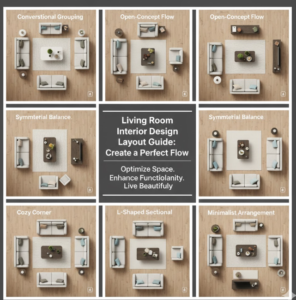
Instead, try pulling furniture slightly away from the walls and creating a tighter, more intentional seating arrangement. This creates a cozy conversation zone and actually makes the room feel better proportioned.
How to Plan the Perfect Layout
Before moving heavy furniture around, use graph paper or a free app like Roomstyler or Planner 5D to map out the room. Measure everything — your room dimensions and your furniture — and experiment digitally first.
Here are a few layout rules that work well in small living rooms:
Keep the center of the room open. Avoid placing anything large in the middle. Keep that space as open as possible.
Anchor the room with a rug. A rug that fits under at least the front legs of your sofa and chairs ties the furniture together and defines the seating area without needing walls to do it.
Create a clear traffic path. Always make sure there’s an easy walking path through the room. At least 30 inches of clearance between pieces of furniture is a good rule.
Face seating toward a focal point. Whether it’s a fireplace, a TV, or a large window, orient your main seating toward it. This creates structure and makes the room feel intentional.
Tip 5: Use Vertical Space Smartly
Look Up — There’s Space You’re Not Using
When floor space is limited, the solution is often to go vertical. Most small living rooms have walls that reach up 8, 9, or even 10 feet — but the furniture and décor only occupy the bottom half.
Using vertical space is one of the smartest tricks in living room interior design because it draws the eye upward, making the room feel taller, and it gives you more storage and display space without taking up floor area.
Shelving That Goes Floor to Ceiling
Instead of a short bookcase, opt for tall, floor-to-ceiling shelving. This immediately makes a room feel grander and more intentional. Use the upper shelves for less-used items or decorative objects, and keep the lower, more accessible shelves for everyday things.
Built-in shelves look especially polished in a small room because they don’t have visible sides or extra bulk. If built-ins aren’t in the budget, tall freestanding bookcases work just as well.
Hang Things Higher
Hang curtains as close to the ceiling as possible — not just above the window frame. This draws the eye upward and makes windows look taller and more dramatic.
The same goes for art. Hanging artwork slightly higher than you normally would gives the impression of a taller room. And when you hang multiple pieces, try to extend the arrangement upward rather than spreading it wide.
Tip 6: Cut the Clutter — Every Item Should Have a Purpose
Clutter Is the Enemy of Small Spaces
In a big living room, a little clutter just looks lived-in. In a small living room, it can quickly make the space feel chaotic and suffocating.
Good living room interior design in tight spaces is all about intention. Every item in the room — every pillow, every decorative object, every throw blanket — should have a reason for being there. If something doesn’t add beauty or function, it’s working against you.
This doesn’t mean your room has to look cold or minimal. It just means being more selective about what you keep on display.
Smart Storage Solutions for Small Living Rooms
Hidden storage is your best friend. Here are some of the most effective options:
Floating shelves keep things off the floor while giving you display and storage space. They’re especially useful in corners that would otherwise be wasted.
Built-in cabinets below the TV keep media equipment, remotes, and miscellaneous items tucked away and out of sight.
Baskets and boxes on shelves give a tidy, organized look while hiding whatever you don’t want on display.
Storage benches near the entry or along a wall give you extra seating and a place to stash items quickly.
The goal is to keep surfaces as clear as possible. Open, clear surfaces instantly make a room feel calmer and more spacious.
The “One In, One Out” Rule
A simple habit that helps maintain a clutter-free small living room: whenever something new comes in, something old goes out. This prevents slow accumulation over time and keeps the room feeling intentional and designed — not just filled.
Tip 7: Use Lighting Layers to Create Depth and Warmth
Why One Overhead Light Isn’t Enough
Most small living rooms rely on a single overhead light. It’s functional, sure — but it creates flat, even lighting that actually makes a space feel smaller and less interesting.
Layered lighting, on the other hand, creates depth. It makes some parts of the room brighter and lets others recede, which gives the illusion of more space. It also makes the room feel warmer and more inviting — two things that are always welcome in a small space.
The Three Layers of Living Room Lighting
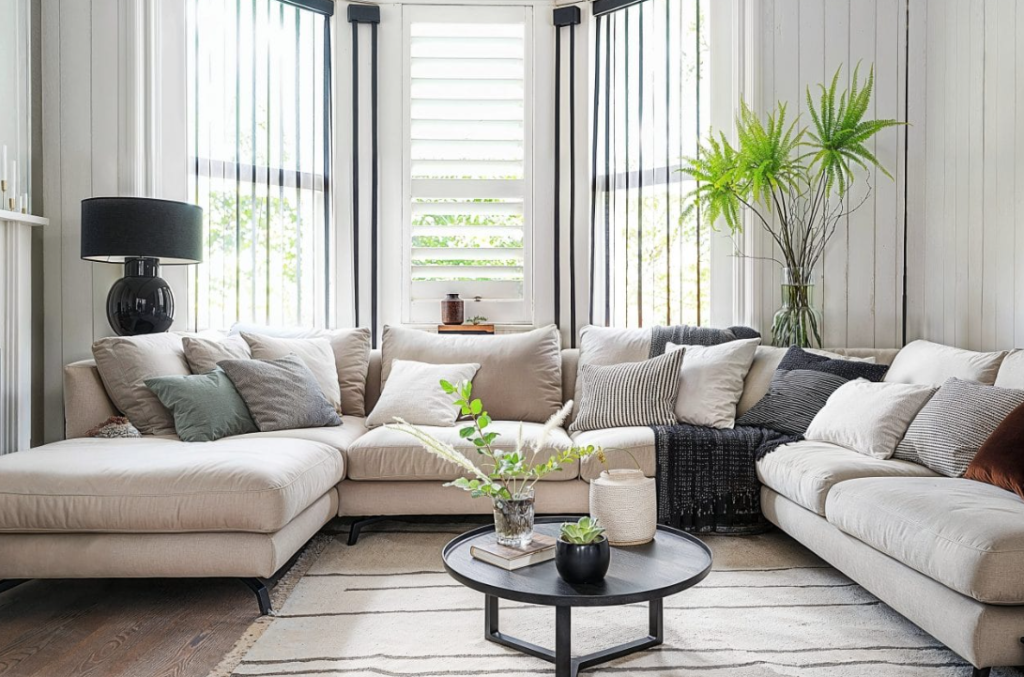
Good living room interior design uses three types of lighting together:
Ambient lighting is the main source of light — usually overhead. A ceiling light, flush mount, or simple pendant falls into this category.
Task lighting is focused light for specific activities. A floor lamp next to the reading chair or a desk lamp on a side table counts here.
Accent lighting adds drama and depth. LED strip lights behind the TV, a small lamp on a bookshelf, or picture lights above artwork are all great examples.
When all three layers are used together — and especially when they’re on separate switches or dimmers — you can completely change the mood and feel of a small room with the flip of a switch.
Go Tall With Floor Lamps
In a small living room, floor lamps are better than table lamps in most cases. They take up less surface area, they draw the eye upward, and they give you more flexibility about where to place them. A tall arc floor lamp over the sofa, for example, adds light exactly where you need it while becoming a stylish design statement on its own.
Quick Comparison: Common Small Living Room Mistakes vs. Smart Fixes
| Common Mistake | Why It’s a Problem | Smart Fix |
|---|---|---|
| Pushing all furniture against walls | Creates disconnected, awkward layout | Pull furniture slightly inward |
| Using dark, heavy colors | Makes room feel smaller and darker | Choose light, neutral tones |
| Buying oversized furniture | Takes up too much visual and floor space | Use slim, scaled-down pieces |
| Ignoring vertical space | Wastes potential storage and height | Add tall shelving and high-hung art |
| Too much decor on every surface | Feels cluttered and chaotic | Edit down, keep only what you love |
| Single overhead lighting | Flat and uninteresting | Layer ambient, task, and accent lights |
| Blocking windows with furniture | Reduces natural light | Keep window areas open and clear |
Real-World Inspiration: How These Tips Come Together
Imagine a 12×14 foot living room. At first glance, it feels tight. But with the right approach to living room interior design, it becomes one of the best rooms in the home.
Light gray walls reflect natural light. A slim two-seater sofa sits on a soft cream rug, pulled about a foot away from the wall. A storage ottoman doubles as a coffee table. Floor-to-ceiling floating shelves line one wall, making the room feel taller. Sheer curtains hang from the ceiling, framing a single window that floods the room with light.
A large mirror on the opposite wall reflects the window and doubles the sense of space. A tall arc lamp curves over the sofa for reading light. Small potted plants on the shelves add a touch of life without taking up floor space.
The room is stylish, functional, and — most importantly — it doesn’t feel small at all.
That’s the power of intentional design. For more room-by-room inspiration, check out Inspirations for Interiors, where you’ll find creative ideas for every style and space.
If you want to go deeper on small-space design principles, the team at Architectural Digest regularly publishes stunning transformations of compact homes that prove great design has no size limit.
FAQs About Living Room Interior Design for Small Spaces
What is the best color for a small living room?
Light, neutral colors work best — think whites, soft grays, warm creams, and pale blues. These shades reflect natural light and make the room feel more open. If you want something with more personality, a soft sage green or dusty blue can work beautifully without making the room feel closed in.
How do I make a small living room look bigger without renovating?
Start with light colors on the walls and large mirrors to reflect light. Pull furniture slightly away from the walls, use multi-functional pieces, and add floor-to-ceiling shelving to draw the eye upward. Good lighting layering also makes a big difference without any structural changes.
What size rug should I use in a small living room?
A rug that fits under the front legs of all your main seating pieces is a safe choice. Going too small (like a rug that only sits under the coffee table) makes the room feel fragmented. When in doubt, size up — a larger rug often makes a room feel bigger, not smaller.
Should I use a sofa or chairs in a small living room?
This depends on the shape of your room and how you use it. A small two or three-seater sofa paired with one armless accent chair often works better in tight spaces than a full sofa plus loveseat combo. The key is to keep the furniture scaled appropriately and the seating arrangement tight enough to feel intentional.
Is it okay to have lots of plants in a small living room?
Absolutely — in moderation. Plants add life and texture to a room and can actually make it feel more vibrant rather than crowded. Just avoid placing large floor plants in corners that could otherwise be used for storage or light flow. Smaller plants on shelves or hanging planters are a great option for small rooms.
How can I add storage to a small living room without making it feel cluttered?
Use hidden or built-in storage wherever possible. Storage ottomans, lift-top coffee tables, floating shelves with baskets, and TV consoles with closed cabinets all help you store more without creating visual noise. The goal is storage that blends in rather than stands out.
Can dark furniture work in a small living room?
Yes, but use it carefully. One or two pieces of dark furniture — like a charcoal sofa or a dark wood coffee table — can add contrast and sophistication. The key is to balance dark furniture with light walls, light flooring, and plenty of natural or artificial light so the room doesn’t feel heavy.
The Bottom Line: Small Space, Big Style
Small living rooms aren’t a design problem — they’re a design opportunity. With the right choices, even the tiniest room can feel stylish, functional, and surprisingly spacious.
The core of smart living room interior design for small spaces comes down to this: make intentional choices, use every inch wisely, and always think about how light, scale, and color work together.
You don’t need a massive budget or a complete renovation. Start with one or two of the tips in this article — like swapping out heavy curtains, rearranging your furniture layout, or adding a statement mirror — and see how dramatically the room transforms.
Small spaces can surprise you. With the right design thinking, they often end up being the most charming, cozy, and carefully curated rooms in the entire home.
Ready to start designing? Take these tips one step at a time and enjoy the process. Your small living room is about to get a serious upgrade.