Why Your Living Room Layout Matters More Than You Think
Good living room interior design starts with one simple idea — your space should feel natural to move through and comfortable to live in. Yet so many people skip the layout step entirely. They buy furniture they love, drop it in the room, and wonder why something feels “off.”
The truth is, even beautiful furniture can make a room feel awkward if it’s placed wrong. A sofa pushed against a wall, a rug that’s too small, or a coffee table that blocks the walkway — these tiny mistakes add up fast. The result? A room that looks okay in photos but feels uncomfortable in real life.
This guide will walk you through everything you need to know about laying out your living room the right way. From measuring your space to choosing the right furniture arrangement, you’ll learn how to create a room that flows, functions, and feels amazing.
Start Here: Measure Your Room Before Anything Else
Before you move a single piece of furniture, grab a tape measure. Knowing your exact dimensions saves you from costly mistakes.
Write down the length and width of the room. Also note where the doors, windows, outlets, and vents are located. These fixed points are non-negotiable — you can’t move them, so your layout has to work around them.
What to Measure and Record
| Item to Measure | Why It Matters |
|---|---|
| Room length and width | Sets the boundary for furniture placement |
| Door swing radius | Ensures doors can open freely |
| Window height from floor | Guides sofa and table heights |
| Electrical outlet positions | Affects lamp and TV placement |
| Fireplace or built-in location | Becomes your natural focal point |
| Ceiling height | Influences lighting and tall furniture choices |
Once you have all your measurements, sketch a rough floor plan on paper or use a free app like RoomSketcher or IKEA’s planning tool. This lets you experiment with different layouts before lifting anything heavy.
Pick Your Focal Point First
Every great living room has a focal point — one main area that draws your eye when you walk in. It anchors the entire room and guides where your furniture should go.
Common focal points include:
- A fireplace
- A large window with a view
- A TV wall or entertainment unit
- A bold piece of artwork
Once you identify your focal point, arrange your main seating to face it. This creates an instant sense of purpose and direction in the room.
What If Your Room Has No Obvious Focal Point?
No fireplace? No breathtaking view? No problem. You can create one. A large gallery wall, a statement bookshelf, or even a well-styled media console can serve as your anchor. Paint one wall a bold color to give the eye somewhere to land.
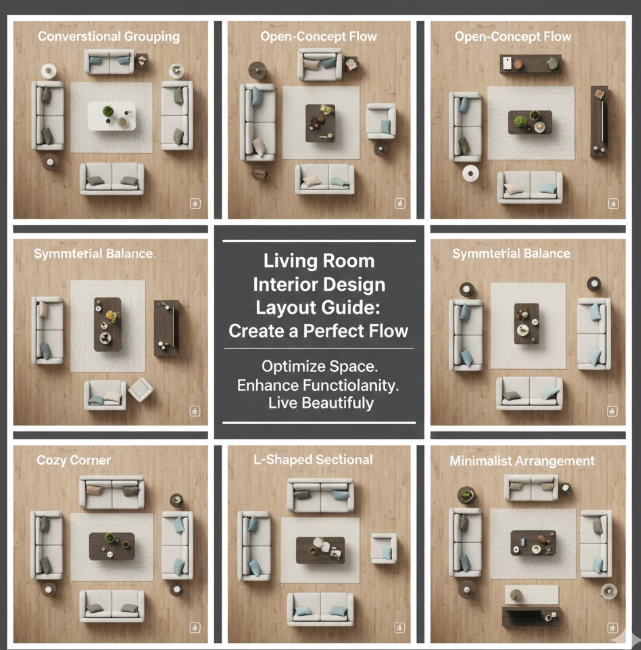
The 5 Most Popular Living Room Furniture Layouts
The layout you choose depends on your room shape, size, and how you use the space. Here are the five most common arrangements and when each one works best.
1. The Symmetrical Arrangement
This layout uses matching furniture on both sides of a central focal point. Think two sofas facing each other, or two armchairs flanking a fireplace.
Best for: Formal living rooms, larger square rooms, homes that feel a bit chaotic and need visual calm.
Tip: Symmetry feels elegant but can sometimes look stiff. Add a few mismatched pillows or a unique art piece to loosen it up.
2. The L-Shaped Sofa Layout
An L-shaped sofa (or a sofa plus a loveseat arranged at a right angle) creates a cozy, casual feel. It works especially well in open-plan spaces where you need to define the living area without walls.
Best for: Open-concept homes, casual family rooms, medium to large rectangular spaces.
Tip: Use a rug to “frame” the L-shape and signal where the living area starts and ends.
3. The Floating Arrangement
Many people push all their furniture against the walls, thinking it makes the room feel bigger. Actually, it does the opposite. Floating furniture — pulling it away from the walls — creates a more intimate conversation area and makes the room feel purposeful and designed.
Best for: Larger rooms where furniture against the wall looks isolated and disconnected.
Tip: Leave 12–18 inches between the back of a sofa and the wall. This small gap creates a sense of spaciousness.
4. The Single-Sofa Layout
In smaller living rooms, one sofa plus one or two chairs is often the perfect combination. It keeps the space from feeling crowded while still offering enough seating.
Best for: Small to medium rooms, apartments, studio-style spaces.
Tip: Choose a sofa with legs instead of a solid base — it lets light pass underneath and makes the room feel more open.
5. The Conversation Circle
For rooms without a TV as the main focus, arranging chairs and sofas in a rough circle or U-shape encourages face-to-face conversation. This works beautifully in more formal sitting rooms or reading nooks.
Best for: Rooms where socializing is the primary activity, sunrooms, formal sitting areas.
Living Room Interior Design: The Golden Rules of Spacing
Spacing is one of the most overlooked parts of living room interior design. Even a perfect furniture arrangement can fall apart if the spacing is off.
Here are the key spacing guidelines every room needs:
| Space Between Items | Recommended Distance |
|---|---|
| Sofa to coffee table | 14–18 inches |
| TV to seating | 6–10 feet (varies by TV size) |
| Main walkway through room | At least 36 inches wide |
| Seating to seating across from each other | 6–10 feet for easy conversation |
| Furniture to walls (floating) | 12–18 inches |
| Armchair to sofa (side by side) | 6–10 inches apart |
These aren’t strict rules — they’re starting points. Adjust based on how your room actually feels when you walk through it.
How to Choose the Right Rug Size (Most People Get This Wrong)
A rug that’s too small is one of the most common mistakes in home design. It makes furniture look like it’s floating on an island, disconnected from the room.
For a living room, the general rule is: all main furniture legs should sit on the rug, or at minimum the front two legs of each sofa and chair should touch it.
Quick Rug Size Guide
| Room Size | Recommended Rug Size |
|---|---|
| Small (under 150 sq ft) | 5×8 feet |
| Medium (150–250 sq ft) | 8×10 feet |
| Large (250–350 sq ft) | 9×12 feet |
| Extra large (350+ sq ft) | 10×14 feet or larger |
When in doubt, go bigger. A larger rug almost always looks better than one that’s too small.
Traffic Flow: The Hidden Key to a Comfortable Living Room
Traffic flow refers to how people move through your living room. If someone has to squeeze past the sofa to reach the kitchen, or step around the coffee table to sit down, your layout is working against you.
Good living room interior design always leaves clear, natural pathways. Here’s how to create them:
Keep main walkways at least 36 inches wide. This is wide enough for two people to pass comfortably.
Don’t block doorways. Leave at least 32–36 inches clear on either side of every door.
Position the coffee table so people can easily reach it and walk around it. A good rule of thumb: at least 14 inches between the sofa and table, and at least 24 inches on the other sides for walking.
A Simple Way to Test Your Flow
Walk through your living room as if you’re moving from the front door to the kitchen, then to the sofa, then to the TV. If you have to step around or squeeze past anything, that’s a spot to fix. Your room should feel like it guides you naturally, not like a maze.
Lighting Design: Layer It for the Best Results
Lighting can completely transform a living room. Flat, single-source lighting (like one overhead light) makes a room feel clinical and flat. Layered lighting makes it feel warm, dynamic, and professionally designed.
The Three Layers of Lighting
Ambient lighting is your base layer — it fills the whole room with general light. This is usually ceiling fixtures, recessed lights, or a central chandelier.
Task lighting helps you do specific things, like reading. Floor lamps next to armchairs, or table lamps on end tables, fall into this category.
Accent lighting adds drama and depth. It highlights artwork, shelves, or architectural features. Think picture lights, LED strips behind the TV, or uplights behind a plant.
Aim to have at least two or three of these layers working together in your living room. Use dimmable bulbs wherever possible — they give you maximum flexibility throughout the day.
Color and Your Living Room Layout: How They Work Together
Color doesn’t just affect how a room looks. It affects how it feels and even how large or small it seems.
Lighter colors (whites, soft grays, creams) make a room feel bigger and more open. Darker colors (navy, forest green, charcoal) make it feel cozier and more intimate.
When planning your living room interior design, consider these color principles:
Use the 60-30-10 rule. Sixty percent of the room should be your main color (usually walls and large furniture). Thirty percent is a secondary color (rugs, curtains, accent chairs). Ten percent is your accent color (pillows, vases, artwork).
Don’t forget your ceiling. Painting your ceiling the same color as your walls (or one shade lighter) creates a seamless, cocoon-like feel. It works especially well in cozy or moody rooms.
Repeat colors throughout the room. If your sofa has a blue pillow, echo that blue somewhere else — a throw, a vase, or a piece of art. This creates visual cohesion.
Small Living Room? Here’s How to Make It Feel Bigger
Small rooms need smart design decisions. The good news: you can make almost any small living room feel significantly larger with the right approach.
Design Tricks That Actually Work
Use mirrors strategically. A large mirror on one wall doubles the visual depth of the room. Place it opposite a window to bounce natural light around.
Choose furniture with exposed legs. Sofas, chairs, and tables that sit on visible legs look lighter and take up less visual weight.
Go vertical. Tall bookshelves, floor-to-ceiling curtains, and vertical artwork all draw the eye upward, making the ceiling feel higher.
Limit the number of furniture pieces. In a small room, less really is more. Choose fewer, more purposeful items instead of filling every corner.
Use a light, neutral color palette. Whites and soft neutrals bounce light and keep the space feeling airy.
You can find more layout ideas and room inspiration at Inspirations for Interiors, where real rooms show these principles in action.
Open-Concept Living Rooms: How to Define Your Space
Open-plan homes are popular, but they come with a real design challenge: how do you make the living area feel like its own space when it flows directly into the kitchen or dining room?
The answer is zone definition — creating visual boundaries without physical walls.
Smart Ways to Define Zones
Use area rugs. A rug in the living area visually separates it from the rest of the open space. This is the most effective and affordable zoning tool available.
Position furniture to face away from other zones. A sofa with its back to the kitchen creates a subtle but clear boundary.
Use consistent lighting zones. A floor lamp or pendant light specifically over the living area reinforces that it’s a distinct space.
Play with color. A different accent wall or pillow palette in the living area versus the dining area helps each zone feel individual.
According to Architectural Digest, defining zones in an open floor plan is one of the top interior design challenges homeowners face — and the rug trick is consistently cited as the most effective solution.
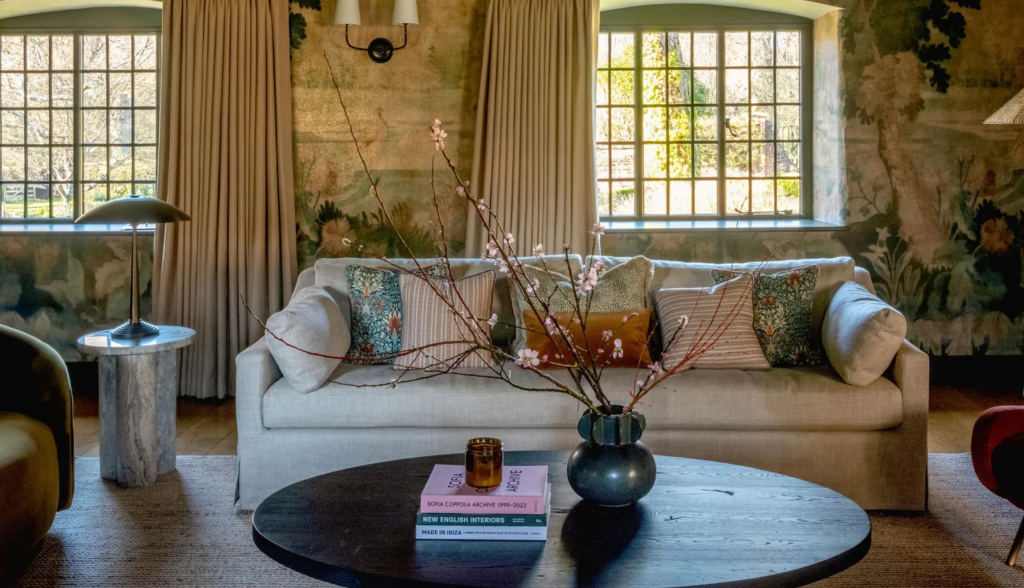
How to Style Your Living Room: The Final Touches
Once your layout is set, it’s time to layer in the details that make the room feel finished and personal. This is where living room interior design becomes genuinely fun.
Coffee Table Styling
A coffee table should hold a mix of functional and decorative items. A good formula: one tray (to organize smaller items), one stack of books, one natural element (a plant, stones, or a wooden bowl), and one personal item that means something to you.
Shelving and Walls
Empty shelves and blank walls make even a well-laid-out room feel unfinished. For shelves, alternate between books, art objects, plants, and personal items. Vary the heights and don’t fill every inch — some breathing room is part of the design.
For walls, think beyond a single framed print. Gallery walls, large-scale artwork, woven wall hangings, or even architectural details like floating shelves all add richness and personality.
Plants and Natural Elements
Plants do more for a living room than most people realize. They add color, texture, life, and even cleaner air. Place a large plant in an empty corner to fill the space naturally. Use smaller plants on coffee tables, shelves, and windowsills to add layers of greenery throughout.
Living Room Interior Design Mistakes to Avoid
Even experienced decorators fall into these traps. Here’s what to watch out for:
| Common Mistake | Why It’s a Problem | The Fix |
|---|---|---|
| Pushing all furniture to the walls | Creates a disconnected, empty-feeling center | Float furniture 12–18 inches from walls |
| Rug that’s too small | Makes furniture look unanchored | Choose a size where all front legs sit on the rug |
| Single overhead light only | Feels flat and clinical | Add floor lamps, table lamps, and accent lights |
| Blocking natural light | Makes the room feel dark and small | Keep window areas furniture-free |
| Too many focal points | Creates visual confusion | Choose one main focal point and build around it |
| Ignoring scale | Small furniture in a big room feels lost | Match furniture scale to room size |
| Cluttered surfaces | Makes even a nice room feel messy | Edit ruthlessly — keep only what earns its place |
A Simple Step-by-Step Layout Process
Feeling overwhelmed? Follow these steps in order and the whole process becomes much simpler.
Step 1: Measure the room and note all fixed features (doors, windows, outlets).
Step 2: Identify or create your focal point.
Step 3: Choose your layout style (symmetrical, L-shape, floating, etc.).
Step 4: Place your largest piece of furniture first (usually the sofa).
Step 5: Add secondary seating (chairs, loveseats) to complete the conversation area.
Step 6: Position the coffee table with proper spacing.
Step 7: Add the rug (make sure it’s the right size).
Step 8: Place lighting at all three layers.
Step 9: Add finishing touches — art, plants, accessories.
Step 10: Walk through the room and test the traffic flow. Adjust as needed.
FAQs About Living Room Interior Design
Q: How far should the sofa be from the TV?
The ideal distance depends on TV size. A general rule: multiply the TV’s diagonal screen size (in inches) by 1.5 to 2.5. For a 55-inch TV, aim for roughly 7 to 11 feet of distance.
Q: Should furniture touch the walls?
Not necessarily. In smaller rooms, furniture against the wall can help save space. In larger rooms, floating furniture away from the walls actually makes the room feel more spacious and intentional.
Q: What’s the most important piece of furniture to get right?
The sofa. It’s the largest item in the room and sets the tone for everything else. Get the scale, placement, and color right before worrying about anything else.
Q: How do I make my living room look more expensive?
Focus on quality over quantity. Choose fewer, better pieces. Use consistent materials (mixing too many wood tones looks cluttered). Add texture through rugs, pillows, and throws. And never underestimate the power of good lighting.
Q: Can I mix different furniture styles?
Absolutely. Mixing styles adds personality and prevents a room from looking too “catalog-perfect.” The key is to find a common thread — a shared color, material, or finish — that ties the different pieces together.
Q: How do I choose the right sofa size?
As a rule of thumb, your sofa should take up about two-thirds of the wall it sits against. In a room with a 12-foot wall, a 7–8-foot sofa is ideal. Always leave at least 3 feet of clear space on either side for walking.
Q: What color should I paint my living room?
There’s no single right answer, but neutral tones (warm whites, soft grays, warm beiges) are the most flexible because they work with almost any furniture and allow easy updates through accessories. If you want something bolder, pick one accent wall rather than painting all four.
Bringing It All Together
A well-designed living room doesn’t happen by accident. It starts with a clear plan, smart spacing decisions, and a deep understanding of how people actually move through and use the space.
The best living room interior design isn’t about following every trend or buying the most expensive furniture. It’s about understanding the bones of your room — its shape, its light, its focal points — and working with them instead of against them.
Use the principles in this guide as your foundation. Measure first. Float your furniture. Layer your lighting. Choose a rug that’s big enough. And above all, design for how you actually live.
A living room that flows well is one you’ll want to spend time in every single day. And that, more than any design trend or expensive purchase, is the real goal.
Ready to explore more layout ideas and room transformations? Visit Inspirations for Interiors for real-home inspiration that brings these principles to life.