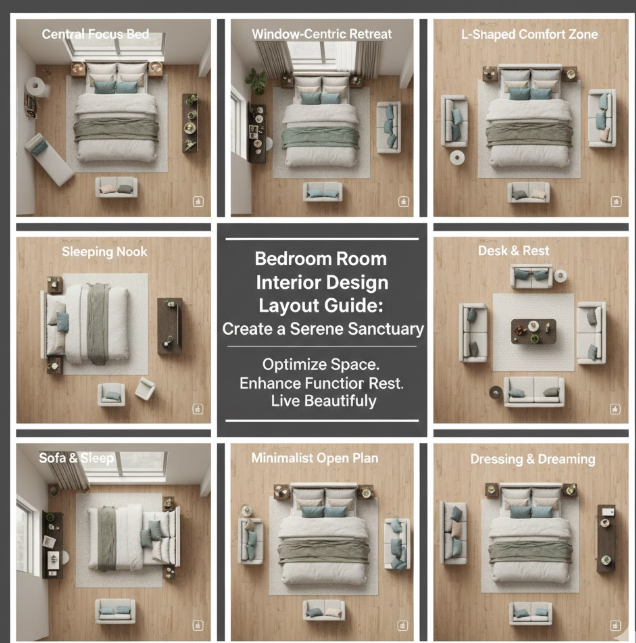
Your Bedroom Should Feel Like a Sanctuary — Here’s How to Make It One
Most people spend nearly one-third of their lives in their bedroom. Yet, very few people put real thought into how their bedroom is laid out. The truth is, a smart bedroom interior design plan can completely change how you feel — both when you sleep and when you wake up.
A room that feels cramped, dark, or cluttered doesn’t just look bad. It actually affects your mood, your stress levels, and even the quality of your sleep. On the flip side, a well-planned bedroom layout makes the space feel calm, open, and deeply comfortable.
This guide walks you through every step of designing your bedroom layout for maximum comfort. From measuring your space and placing your bed to choosing colors and layering lighting — you’ll find practical, easy-to-follow advice throughout.
Let’s build your perfect bedroom from the ground up.
Before You Move a Single Piece of Furniture — Do This First
Grab a Tape Measure and Get to Know Your Room
The number one mistake people make in bedroom design is skipping the measuring step. They buy a bed frame that’s too wide, a dresser that blocks the closet door, or a rug that barely peeks out from under the mattress.
Before anything else, measure your room carefully. Write down:
- The total length and width of the room
- The height of the ceiling
- The exact location of doors and which way they swing
- The position of all windows, including how high they sit off the floor
- The location of electrical outlets and light switches
These measurements are your design blueprint. Every decision you make from here should work around them.
Sketch a Simple Floor Plan
You don’t need design software or professional tools for this. A piece of graph paper works perfectly. Let each square represent one square foot of real space.
Once your room is drawn to scale, cut out small paper rectangles to represent your furniture pieces. Move them around on the paper. Try five different arrangements before committing to one. This simple exercise can save you hours of rearranging heavy furniture — and a lot of frustration.
The Bed Is the Boss — Place It Right
In any bedroom, the bed is the most important piece of furniture. Everything else in the room should work around it. That’s why bed placement is the first real decision in your bedroom interior design layout.
Where Should the Bed Actually Go?
The ideal placement for most beds is against the wall that faces the door — but not directly in line with the door. This position, sometimes called the “command position,” gives you a clear view of the entrance while you’re lying down. That sense of awareness naturally helps your body relax.
Avoid these bed placements:
- Directly under a window (light, noise, and drafts will interrupt your sleep)
- Pressed into a corner where one side is inaccessible (unless space truly demands it)
- Directly against a wall shared with a loud space, like a bathroom or kitchen
- Right in the path of the bedroom door’s swing
Always Aim for Symmetry
Whenever your room allows it, center the headboard on the wall. Then place matching nightstands on both sides. This creates visual balance — and balance feels naturally calm to the human brain.
Symmetry doesn’t have to be perfect. Even similar-sized items on each side of the bed create enough visual harmony to make the space feel put-together.
Bedroom Size and Bed Size: Matching Them Correctly
Picking the wrong size bed for your room is one of the fastest ways to ruin a bedroom layout. A king-sized bed in a small room leaves no space to breathe. A twin bed in a large room looks lost and awkward.
Use this table as a reference guide:
| Room Size | Recommended Bed Size | Minimum Clearance on Each Side |
|---|---|---|
| Under 100 sq ft | Twin or Twin XL | 18 inches |
| 100–150 sq ft | Full / Double | 20–24 inches |
| 150–200 sq ft | Queen | 24–30 inches |
| 200–300 sq ft | King or Queen | 30–36 inches |
| 300+ sq ft | King or California King | 36+ inches |
Clearance space — the walkable area around the bed — matters more than most people realize. It affects how easy it is to move through the room, make the bed, and get in and out comfortably.
Arranging the Rest of Your Furniture Without Creating Chaos
Once the bed is placed, the rest of the furniture falls into a supporting role. The goal is to create a layout where every piece has a purpose and nothing feels like it was just thrown in.
Dresser and Chest of Drawers Placement
Large storage furniture like dressers should go on walls that don’t compete with natural light. Blocking a window with a tall dresser makes the room feel darker and smaller than it really is.
In small rooms, choose a tall, narrow dresser over a wide, low one. It holds just as much while occupying less floor space.
Also, leave at least 36 inches in front of any dresser so you can fully open the drawers without bumping into the bed or wall.
Desks and Vanities — Give Them Their Own Zone
If you study, work, or do your makeup in your bedroom, carve out a dedicated corner for it. Position a desk or vanity near a window whenever possible. Natural light is ideal for focused tasks and for seeing colors clearly when getting ready.
Keep this zone visually separated from the sleep area. Even something as simple as a small shelf or a change in rug pattern can create a psychological boundary between “work mode” and “rest mode.”
Seating in the Bedroom — Worth It or Wasted Space?
In larger bedrooms, a small chair or loveseat adds both style and function. A reading nook near the window, a bench at the foot of the bed, or two armchairs in a corner all create inviting spots to relax without lying in bed.
In smaller bedrooms, however, seating often eats up precious floor space. If you’re working with under 150 square feet, skip the extra chair and prioritize clear walking paths instead.
A Full Furniture Placement Reference
| Furniture | Best Wall/Position | Common Mistake |
|---|---|---|
| Bed | Opposite door, centered | Blocking door or under window |
| Dresser | Side wall, not near window | Obstructing natural light |
| Desk/Vanity | Corner near window | Facing a blank, dark wall |
| Nightstands | Both sides of bed | Too far from the bed |
| Wardrobe | Longest available wall | Blocking closet or door access |
| Bench/Ottoman | Foot of bed | Blocking walking path |
| Armchairs | Corner or window nook | Placed too close to the bed |
Room Design Colors: How to Pick a Palette That Helps You Rest
Color plays a massive role in how a room feels. In bedroom interior design, the right color palette can help your brain slow down and prepare for sleep. The wrong colors can do the exact opposite.
Colors That Promote Calm and Comfort
Research consistently shows that soft, muted tones are the most effective for sleep-friendly bedrooms. Some top choices include:
Soft Blue — One of the most universally calming colors. It mimics the sky and water and has been linked to lower heart rate and blood pressure.
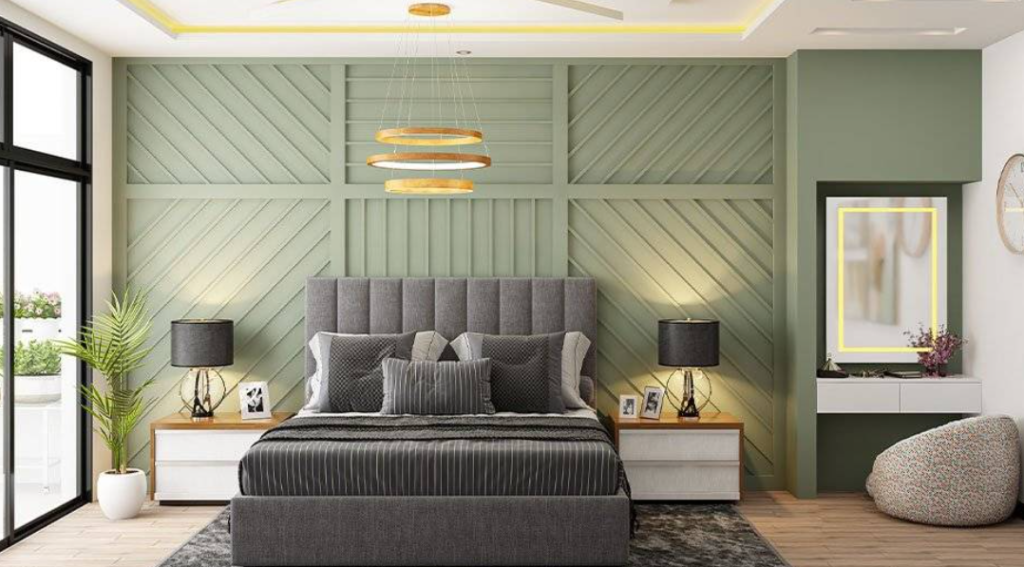
Sage Green — Earthy and grounding. It brings a sense of nature indoors, which naturally reduces stress.
Warm Beige and Taupe — Neutral and cozy. These tones work with almost any furniture style and feel inherently welcoming.
Dusty Lavender — Soft purple tones feel romantic and restful. Great for both adults and teenagers.
Off-White and Warm Cream — Light and airy without feeling clinical. Pairs beautifully with natural wood or rattan furniture.
Colors to Handle with Care
Bold, high-energy colors like bright red, electric orange, and neon yellow stimulate the brain. They’re exciting — but not restful. If you love these shades, use them in small doses: a throw pillow, a piece of artwork, or a single decorative item.
The Accent Wall Trick
Not ready to commit to one color for the whole room? Try painting just the wall behind your headboard in a deeper or contrasting shade. This accent wall technique adds depth and personality without overwhelming the space.
Lighting Your Bedroom the Right Way
Lighting is one of the most underestimated tools in bedroom design. Most bedrooms have just one overhead light — and that’s rarely enough to create a comfortable, layered atmosphere.
The Three-Layer Lighting Method
Great bedroom lighting works in three layers:
Layer 1 — Ambient Lighting This is your primary light source. It fills the room with general, overall light. A ceiling fixture, recessed lights, or a flush-mount light all work here.
Layer 2 — Task Lighting Task lights serve specific functions. Bedside lamps, wall-mounted sconces, or clip-on reading lights let you read, journal, or scroll without lighting the whole room.
Layer 3 — Accent Lighting Accent lights are about mood. LED strip lights under the bed frame, a warm lamp in the corner, or soft string lights above the headboard all fall into this category. They add warmth and personality.
Light Bulb Color Temperature — It Matters More Than You’d Think
| Bulb Color Temperature | Light Appearance | Best Use |
|---|---|---|
| 2700K | Warm yellow-white | Bedrooms, bedside lamps |
| 3000K | Soft warm white | General bedroom lighting |
| 3500K | Neutral white | Reading lights |
| 5000K–6500K | Bright daylight | Home offices, not bedrooms |
For bedrooms, always stay below 3500K. Bright, cool light suppresses melatonin — the hormone that helps you fall asleep.
Smart Storage Ideas for a Clutter-Free Bedroom
No matter how beautiful your bedroom design is, clutter destroys the effect. Good bedroom interior design always includes a smart storage strategy.
Under-Bed Storage — Use Every Inch
The space under your bed is often completely wasted. Flat storage bins, rolling drawers, or vacuum bags work perfectly here. Store off-season clothes, extra blankets, or spare pillows out of sight but within easy reach.
Some bed frames come with built-in drawers. If you’re shopping for a new frame, this feature is worth every penny — especially in small rooms.
Floating Shelves and Wall-Mounted Storage
Floating shelves keep items off the floor while adding visual interest to plain walls. Install them above the bed, beside a window, or in any otherwise unused vertical space.
Wall-mounted storage is particularly useful in rooms under 150 square feet. It draws the eye upward and gives the illusion of higher ceilings.
Closet Organization Systems
A disorganized closet bleeds clutter into the bedroom. Even basic closet organizers — a second hanging rod, shelf dividers, a door-mounted shoe rack — can double your storage capacity.
Use clear bins so you can see contents at a glance. Label everything. A well-organized closet means fewer items end up on bedroom surfaces.
Textures, Fabrics, and the Art of a Cozy Bedroom
Comfort isn’t only visual. The materials you choose — what you touch, feel, and sink into — shape how your bedroom actually feels to be in.
How to Layer Your Bedding
Start with a quality mattress protector. Add a fitted sheet, then a flat sheet, then a duvet or comforter. Finish with decorative pillows and a folded throw blanket at the foot of the bed.
This layered approach looks plush and inviting. It also gives you flexibility — you can adjust warmth easily without getting out of bed.
Area Rugs — A Small Change with a Big Impact
A soft rug beside the bed is one of the most impactful upgrades you can make for under $100. When your feet hit the floor on a cold morning, a warm rug makes an immediate difference.
Rug sizing guide by bed size:
- Twin bed: 5×7 ft rug, placed two-thirds under the bed
- Queen bed: 8×10 ft rug, extending 18–24 inches on each side
- King bed: 9×12 ft rug, extending 24–30 inches on each side
Curtains That Do Double Duty
Curtains serve two purposes: they control light and they add softness. Blackout curtains block morning light for better sleep and add a cozy, cocoon-like feel to the room.
Hang curtain rods as close to the ceiling as possible, and let the panels fall all the way to the floor. This one trick makes ceilings look taller and rooms look larger — every time.
Design Tricks That Make Small Bedrooms Feel Much Bigger
Small bedrooms are one of the most common design challenges. But with the right approach to bedroom interior design, even a compact room can feel spacious, stylish, and deeply comfortable.
Mirrors Are Your Best Friend
A large mirror on one wall visually doubles the space. It bounces light around the room and creates the illusion of depth. Place it opposite a window for maximum effect.
Stick to a Unified Color Palette
In small rooms, too many colors create visual noise. The room feels smaller and more chaotic. Instead, choose two or three tones that work together — for the walls, bedding, and furniture — and stick to them consistently.
Multi-Functional Furniture Saves the Day
In a small bedroom, every piece of furniture should serve more than one purpose. A storage ottoman at the foot of the bed. A bed frame with built-in drawers. A nightstand with a built-in charging station. A desk that folds against the wall when not in use.
These smart choices free up floor space and reduce clutter without sacrificing function.
Popular Bedroom Design Styles — Find Your Perfect Match
| Style | Core Look | Key Colors | Signature Elements |
|---|---|---|---|
| Modern Minimalist | Clean, simple, clutter-free | White, gray, black | Platform bed, hidden storage |
| Scandinavian | Cozy, functional, natural | White, beige, soft gray | Wood accents, linen bedding |
| Bohemian | Layered, eclectic, textured | Earthy tones, jewel hues | Mixed rugs, plants, macrame |
| Traditional | Classic, symmetrical, formal | Navy, cream, walnut | Wingback headboard, drapes |
| Industrial | Edgy, raw, urban | Charcoal, black, rust | Exposed brick, metal fixtures |
| Coastal | Airy, relaxed, bright | Soft blue, white, sand | Natural wood, linen, seagrass |
| Japandi | Calm, balanced, intentional | Warm gray, cream, muted green | Low furniture, natural materials |
How Your Bedroom Design Affects Sleep and Mental Health
This isn’t just about making a room look nice. Your bedroom environment has a direct and measurable impact on how well you sleep and how you feel mentally.
According to sleep researchers, a calm, organized bedroom signals to the brain that it’s time to wind down. Visual clutter, harsh lighting, and a poor layout all send the opposite signal — keeping your nervous system in a state of low-level alertness even when you’re trying to rest.
Soft colors, warm lighting, organized spaces, and comfortable textures all work together to lower cortisol (your stress hormone) and encourage melatonin production. The result is faster sleep onset, deeper sleep, and a better mood when you wake up.
For more professional bedroom interior design inspiration and ideas, explore Inspirations for Interiors — a trusted resource for homeowners who want beautiful, functional living spaces.
For science-backed sleep environment tips, the Sleep Foundation offers detailed research on how bedroom design directly impacts sleep quality.
The Biggest Bedroom Design Mistakes — And How to Dodge Them
Even experienced designers make these common errors. Knowing them ahead of time will save you time, money, and regret.
Oversized furniture in a small room — Always measure before buying. A bed or dresser that’s even six inches too wide can throw off the entire layout.
Blocking windows with furniture — Natural light is one of your best design assets. Never sacrifice it for the sake of fitting in an extra storage piece.
Ignoring the ceiling — The ceiling is often called “the fifth wall.” A fresh coat of paint, a stylish light fixture, or even exposed wood beams can dramatically change the feel of a room.
Too many patterns at once — Bold patterns are fun, but mixing too many in one room creates visual chaos. Use one or two patterns and let solid colors carry the rest.
Skipping the rug — A bare floor in a bedroom feels cold and unfinished. Even a small rug beside the bed adds warmth and pulls the space together.
Using only one light source — A single overhead light creates flat, unflattering illumination. Layer your lighting for a warmer, more comfortable atmosphere.
Frequently Asked Questions About Bedroom Interior Design
Q1: What is the most important rule in bedroom interior design? The most important rule is to prioritize function before style. Start with the right layout, bed placement, and storage. Once those are solid, add your colors, fabrics, and decorative touches. A room that looks beautiful but doesn’t work well day-to-day will always feel frustrating.
Q2: How do I design a bedroom with a very tight budget? Start with what you already have. Rearrange your existing furniture based on the layout principles in this guide. Then add low-cost upgrades: a new set of bedding, a rug, blackout curtains, or warm-toned light bulbs. These small changes make a surprisingly big difference.
Q3: What is the best wall color for a bedroom? Soft, muted tones work best — especially soft blue, sage green, warm beige, or dusty lavender. These colors have been shown to lower stress and promote better sleep. Avoid bold, bright colors on large surfaces like walls and ceilings.
Q4: How much walking space should be around the bed? Aim for at least 24 inches of clear space on each side of the bed you use regularly. If both sides are accessible, try for 24 to 30 inches on each side. This makes it easy to move around, make the bed, and access your nightstands.
Q5: How do I make a small bedroom feel larger? Use light colors on the walls, hang curtains from ceiling to floor, add a large mirror, choose multi-functional furniture, and keep surfaces clutter-free. Going vertical with shelves and storage also draws the eye upward, making the room feel taller and more open.
Q6: Should a bedroom have a TV? This depends on your personal habits and sleep goals. Many sleep experts recommend keeping screens out of the bedroom because screen light can interfere with melatonin production. If you do include a TV, mount it on the wall to save floor space and position it so you don’t have to strain your neck while watching.
Q7: What type of rug size works best for a bedroom? For a queen bed, an 8×10 foot rug is ideal. It should extend about 18 to 24 inches on each side of the bed. For a king bed, go with a 9×12 foot rug. The rug should always be large enough so that the first thing your feet touch in the morning is the soft rug — not the cold floor.
Your Dream Bedroom Is Closer Than You Think
Great bedroom interior design doesn’t require a big budget, a professional designer, or a perfectly shaped room. It requires a clear plan, a few smart decisions, and attention to the details that actually affect how your space feels.
Start with your layout. Get your measurements down, place your bed in the right position, and create clear walking paths. From there, build outward — add your furniture, choose a calming color palette, layer your lighting, and bring in textures that make the room feel warm and inviting.
Remember, your bedroom isn’t just a room. It’s the place where you start and end every single day. It should support your rest, reflect your personality, and feel like the most comfortable spot in your entire home.
Take it one step at a time. Sketch your floor plan today. Move that piece of furniture you’ve always known was in the wrong spot. Swap out your light bulb for a warmer tone. Each small change builds toward a bedroom that truly works for you.
Your perfect bedroom is already within reach. Now you have the roadmap to get there.