Your Home Deserves to Feel Like a Five-Star Experience
Walking into a beautifully designed home feels different. The air seems lighter. The space feels intentional. Everything just works. That’s what great modern home interior design does — it turns an ordinary room into something that feels rich, calm, and deeply personal.
You don’t need a million-dollar budget to get that feeling. What you need is the right knowledge, the right choices, and a clear vision.
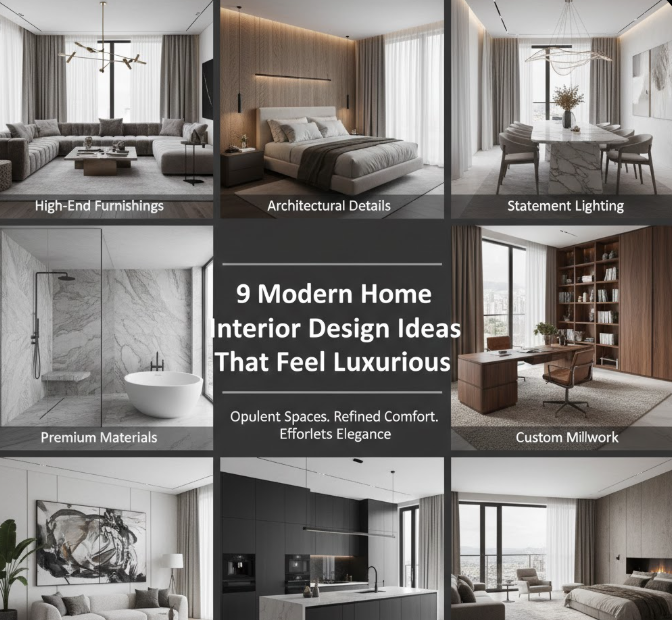
In this article, you’ll discover 9 modern interior design ideas that genuinely feel luxurious. Whether you’re redesigning one room or your entire home, these ideas will help you make smart, beautiful decisions. Let’s dive in.
What Makes a Home Feel Luxurious in the First Place?
Before jumping into the ideas, it helps to understand what “luxury” actually means in design. It’s not just about expensive furniture or gold accents.
Luxury in interior design comes down to three things:
- Quality over quantity — fewer, better pieces
- Intentional space — nothing feels cramped or random
- Sensory comfort — soft textures, warm lighting, calm colors
Keep these three principles in mind as you read through each idea. They’re the foundation of everything that follows.
Idea 1: Go Big with a Neutral Color Palette
Why Neutrals Feel So Expensive
There’s a reason almost every luxury hotel uses shades of white, beige, taupe, and warm gray. Neutral colors create a sense of calm and space. They make a room feel like it was thoughtfully put together rather than randomly decorated.
In modern home interior design, neutral palettes are a go-to move for a reason. They’re timeless. They don’t go out of style. And they make everything else in the room — your furniture, your art, your lighting — stand out more.
How to Do It Right
Start with your walls. Choose a warm white or soft greige (gray-beige). Then layer in textures through pillows, rugs, and throws. The key is variation within the neutral family — don’t just paint everything one flat color and call it done.
Add one or two accent pieces in a slightly deeper tone — dusty rose, sage green, or soft terracotta work beautifully. These small pops of color create visual interest without breaking the calm mood.
Pro Tip: Use matte finishes on walls and semi-gloss on trim. This small contrast adds depth and a polished look to any room.
Idea 2: Invest in Statement Lighting
Lighting Is the Most Underrated Design Tool
Most people pick their furniture first and think about lighting last. But designers do the opposite. Lighting sets the mood of an entire room. It can make a small space feel grand or a large room feel intimate.
In modern interior design, lighting is treated like art. A sculptural pendant light above a dining table. A warm arc floor lamp in the corner of a living room. Recessed lights along a hallway ceiling. These choices define the entire atmosphere.
Types of Lighting to Layer
| Lighting Type | Purpose | Best Placement |
|---|---|---|
| Ambient | Overall illumination | Ceiling fixtures, recessed lights |
| Task | Focused light for activities | Desk lamps, under-cabinet lights |
| Accent | Highlighting features | Wall sconces, picture lights |
| Decorative | Visual statement | Chandeliers, sculptural pendants |
Layering all four types creates a dynamic, rich-feeling room. Never rely on a single overhead light — it flattens everything and feels institutional.
Warm vs. Cool Light Temperature
Choose bulbs with a color temperature between 2700K and 3000K for living spaces and bedrooms. This warm range mimics candlelight and makes skin tones look beautiful. Save cooler white light (4000K+) for kitchens and home offices.
Idea 3: Bring in Natural Materials
Stone, Wood, and Linen Change Everything
There’s something about natural materials that instantly elevates a space. A marble countertop. A raw oak dining table. Linen curtains that pool slightly on the floor. These textures connect your home to the natural world — and that connection feels inherently luxurious.
Modern home interior design leans heavily on natural materials because they age beautifully and never feel cheap. Even small doses make a big difference.
Easy Ways to Add Natural Materials
You don’t need to renovate your kitchen to get this effect. Start small:
- Swap out synthetic throw pillows for linen or cotton ones
- Add a jute or sisal area rug
- Place a small marble tray on your coffee table
- Use wooden bowls or boards as kitchen décor
- Hang linen or cotton curtains instead of polyester panels
Even one or two of these swaps will immediately shift the feel of a room.
Sustainability Bonus
Natural materials are also better for the environment. Linen, wool, stone, and solid wood are durable and biodegradable. Choosing them is both a design win and a responsible one.
Idea 4: Declutter and Embrace Intentional Space
The Luxury of Having Less
Here’s a counterintuitive truth: the most luxurious homes often have less stuff than average homes. Space itself is a luxury. When a room isn’t cluttered, every piece in it gets to breathe and be appreciated.
This idea connects to the minimalist movement, but you don’t have to go full minimalist to benefit from it. The goal is intentionality — every object in your home should earn its place.
The Edit-Down Method
Go room by room and ask yourself about each object: Does this bring me joy? Does it serve a real purpose? Does it fit the look I’m going for?
If the answer to all three is no, it goes. What’s left gets arranged thoughtfully, with space between pieces rather than cramming everything together.
Smart Storage = Cleaner Look
Invest in good storage solutions. Built-in shelving, ottomans with storage inside, and furniture with hidden compartments all help keep surfaces clear. Clean surfaces = luxurious look. It’s that simple.
Idea 5: Use Texture to Add Depth
Texture Is What Makes a Room Feel Alive
Color gets all the attention, but texture is what makes a room feel rich and layered. Imagine a sofa in a flat, plain fabric versus one with subtle woven texture or velvet. The second one instantly looks more expensive — even if it cost the same.
In modern home interior design, mixing textures is a core skill. The goal is contrast: something smooth against something rough, something matte against something shiny, something soft against something hard.
A Simple Texture Mixing Formula
Here’s a formula designers use constantly:
Smooth + Rough + Soft = Balanced, Luxurious Room
For example:
- Smooth: lacquered side table, glass vase
- Rough: exposed brick wall, raw wood shelf
- Soft: velvet cushions, chunky knit throw
You can apply this formula to any room in any style. It works every time.
Don’t Forget the Floor
Floors are the largest surface in any room. A beautiful area rug is one of the fastest ways to add texture, warmth, and luxury to a space. Look for wool, jute, or hand-knotted options for the most authentic feel.
Idea 6: Add a Feature Wall That Stops You in Your Tracks
One Bold Wall Changes the Whole Room
A feature wall — also called an accent wall — is a single wall that’s treated differently from the rest. It might be painted a deeper color, covered in wallpaper, clad in wood panels, or finished with textured plaster.
Done right, a feature wall makes a room feel designed rather than decorated. It gives the space a focal point and adds instant visual drama.
Best Feature Wall Ideas for Modern Interiors
| Feature Wall Type | Best Room | Mood It Creates |
|---|---|---|
| Dark paint (navy, forest green, charcoal) | Living room, bedroom | Dramatic, cozy, sophisticated |
| Fluted wood panels | Living room, hallway | Warm, architectural, modern |
| Limewash plaster | Bedroom, dining room | Organic, textured, luxurious |
| Geometric wallpaper | Home office, powder room | Bold, artistic, personality-driven |
| Stone or brick cladding | Kitchen, living room | Raw, grounded, timeless |
How to Choose the Right Wall
Pick the wall that your eye naturally goes to when you walk into the room. This is usually the wall directly across from the door. That’s your feature wall. Make it count.
Idea 7: Upgrade Your Window Treatments
Curtains Do More Than You Think
Most people treat window coverings as an afterthought. But in luxury design, curtains and drapes are given serious attention — because they dramatically affect how a room looks and feels.
Cheap, thin curtains make a room look unfinished. Floor-length drapes in a quality fabric make a room look expensive immediately. It’s one of the highest-impact, lowest-effort upgrades you can make.
Rules for Luxurious Window Treatments
Hang them high. Mount your curtain rod close to the ceiling, not just above the window frame. This makes the ceiling look taller and the room feel grander.
Go wide. Extend the rod several inches past the window on each side. When the curtains are open, the window looks bigger and more dramatic.
Let them pool. For bedrooms and formal living rooms, let curtains fall about an inch or two past the floor. This look is inherently luxurious.
Choose quality fabric. Linen, velvet, and cotton are the top three choices for a modern luxury feel. Avoid anything that looks shiny or synthetic.
Idea 8: Design a Cohesive, Curated Gallery Wall
Art Makes a Home Feel Personal and Polished
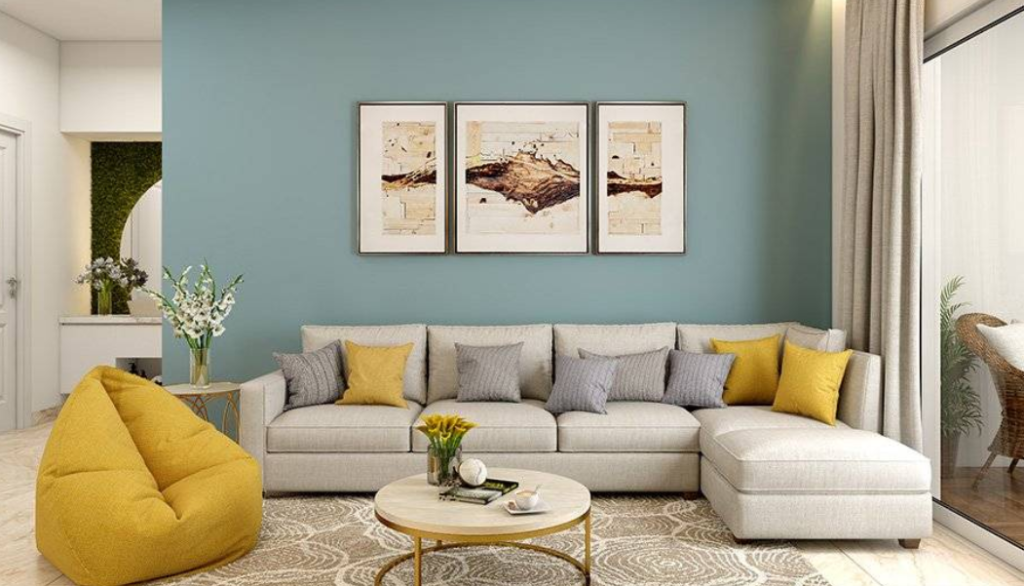
A thoughtfully designed gallery wall is one of the most personal things you can do in your home. It tells your story. It shows what you love. And when it’s done with intention and a cohesive visual approach, it looks extraordinarily sophisticated.
This is a key part of elevated modern home interior design — making spaces feel personal, not like a showroom.
How to Build a Gallery Wall That Actually Looks Good
Most gallery walls fail because they mix too many random elements. Here’s how to build one that looks curated:
Pick a theme or color story. All black-and-white photography. Botanical prints in natural frames. Abstract art in warm earth tones. Whatever you choose, stick to it.
Use consistent framing. Either all matching frames or intentionally varied frames in the same finish (like all black or all natural wood). Avoid a random mix of gold, silver, black, and wood.
Plan the layout on the floor first. Arrange your pieces on the ground before making a single nail hole. Take a photo from above to review the composition.
Start from the center and work outward. Hang the largest piece first, then build around it.
For more room-by-room inspiration and expert styling advice, visit Inspirations for Interiors — a beautifully curated resource for modern design lovers.
Idea 9: Bring the Outdoors In with Biophilic Design
Nature Inside Your Home Is Pure Luxury
Biophilic design is the practice of connecting interior spaces to the natural world. It might sound like an architectural term, but it’s actually a simple idea: plants, natural light, organic shapes, and natural materials all make people feel calmer, happier, and more at ease.
Luxury homes around the world have embraced this approach — and for good reason. Nature-inspired interiors feel alive and vibrant in a way that purely manufactured spaces never can.
Simple Biophilic Design Moves
Add live plants. You don’t need a jungle. One large statement plant — a fiddle leaf fig, a monstera, or a snake plant — makes a massive difference in any room.
Maximize natural light. Remove heavy drapes or dark blinds that block sunlight. Use sheer panels instead to let light flood in.
Use organic shapes. Round mirrors, curved sofas, and irregular-shaped vases all echo forms found in nature. They soften the rigid lines of modern architecture.
Incorporate water features. A small tabletop fountain in a living room or bedroom adds a soothing auditory element that genuinely transforms a space.
According to research shared by Architectural Digest, biophilic spaces not only look better — they measurably reduce stress and increase focus.
Quick Comparison: Budget vs. High-Impact Changes
| Design Idea | Budget Level | Visual Impact | Difficulty |
|---|---|---|---|
| Neutral color palette | Low ($) | Very High | Easy |
| Statement lighting | Medium ($$) | Very High | Medium |
| Natural materials | Low–Medium | High | Easy |
| Decluttering | Free | High | Easy |
| Texture layering | Low ($) | High | Easy |
| Feature wall | Low–Medium | Very High | Medium |
| Window treatments | Medium ($$) | Very High | Easy |
| Gallery wall | Low ($) | High | Medium |
| Biophilic design | Low ($) | High | Easy |
How These Ideas Work Together
The real magic happens when you combine several of these ideas. A neutral color palette gives you a clean canvas. Statement lighting adds drama and warmth. Natural materials bring texture and authenticity. Lush curtains frame the windows. Plants breathe life into corners.
Together, they create a home that feels cohesive, intentional, and genuinely luxurious — without necessarily spending a fortune.
Modern home interior design at its best isn’t about showing off. It’s about creating a space where you feel at your absolute best every single day. And that’s worth every bit of effort.
FAQs About Modern Home Interior Design
What is modern home interior design?
Modern home interior design refers to a style rooted in clean lines, functional spaces, and minimal clutter. It typically features neutral color palettes, natural materials, open floor plans, and a focus on quality over quantity. The goal is spaces that feel both beautiful and livable.
How do I make my home look luxurious on a budget?
Focus on high-impact, low-cost changes first. Declutter your spaces, repaint walls in a warm neutral, hang curtains high and wide, add a few quality throw pillows in natural fabrics, and bring in one or two live plants. These five moves alone will dramatically elevate any room.
What colors are most popular in modern interior design right now?
Warm neutrals remain extremely popular — think cream, warm white, greige, and soft taupe. Beyond neutrals, deep earthy tones like terracotta, sage green, dusty blue, and charcoal are widely used as accent colors. These tones feel contemporary without being trendy.
How important is lighting in interior design?
Extremely important. Lighting affects how every other element in the room looks and feels. Good lighting design layers multiple types of light — ambient, task, accent, and decorative — to create depth, warmth, and atmosphere. It’s often the single biggest difference between a flat-looking room and a stunning one.
What is biophilic design and why is it trending?
Biophilic design brings natural elements — plants, natural light, organic shapes, wood, stone, and water — into interior spaces. It’s trending because research consistently shows it reduces stress, improves mood, and makes people feel more comfortable. It also simply looks beautiful in any modern home.
How often should I update my home’s interior design?
You don’t need to do full renovations every few years. Instead, think of design as a slow evolution. Swap out accessories and soft furnishings every couple of years to keep things fresh. Major changes like paint colors or furniture can stay for five to ten years or longer if you choose timeless pieces over trendy ones.
What’s the difference between modern and contemporary interior design?
Modern interior design refers specifically to the mid-20th century modernist movement — clean lines, function-first thinking, and a rejection of ornament. Contemporary design refers to what’s popular right now, which changes over time. In everyday conversation, people often use these terms interchangeably, but technically they’re different.
The Bottom Line: Your Dream Home Is Closer Than You Think
You’ve just walked through nine powerful ideas that can transform any home into something that feels genuinely luxurious. From the calming effect of a neutral palette to the life-giving presence of indoor plants, each idea is accessible, practical, and deeply effective.
Modern home interior design is not about perfection. It’s about intention. It’s about choosing things you love, arranging them thoughtfully, and creating a space that feels like you — only elevated.
Start with one idea. Master it. Then layer in the next. Before long, you’ll walk through your front door and feel that shift — that sense that everything is exactly right. And that feeling? That’s worth more than any price tag.
Ready to explore more design inspiration and room-by-room styling ideas? Visit Inspirations for Interiors for a wealth of expert tips and visual guides to help you create the home you’ve always imagined.