Your Dream Home Is Closer Than You Think
Modern home interior design does not have to cost a fortune. Many people assume that stylish, well-designed spaces belong only to those with big budgets. That is simply not true. With the right approach, a little creativity, and smart shopping, you can transform any room into something that looks straight out of a design magazine — without draining your bank account.
The secret lies in knowing where to spend, where to save, and how to make every dollar work harder. Whether you are decorating your first apartment, refreshing a tired living room, or giving your whole house a new look, this guide will walk you through everything you need to know.
Let’s get into it.
Why Modern Interior Design Feels Expensive (But Does Not Have to Be)
Most people associate modern design with high-end furniture stores and expensive renovation projects. That image is partly created by social media and home decor brands that push premium pricing. But modern design, at its core, is actually built on simplicity.
Modern interiors focus on clean lines, minimal clutter, neutral colors, and functional furniture. These principles do not require expensive materials. They require thoughtful choices.
The biggest cost in interior design is usually poor planning. People buy things impulsively, end up with mismatched furniture, and then spend more money trying to fix the problem. A clear plan from the start saves both money and stress.
Start With a Plan, Not a Shopping Cart
Before you buy a single thing, map out what you actually want. This is the most important step in budget-friendly modern home interior design.
Sketch Your Vision First
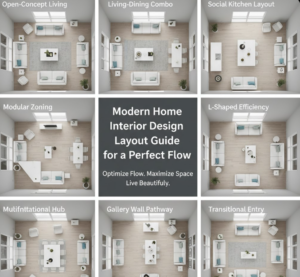
You do not need to be an artist. A simple hand-drawn floor plan works perfectly. Mark where the furniture will go, where the light sources are, and what areas feel most important to you.
Free tools like SketchUp, RoomSketcher, or even Canva let you create digital mood boards and rough layouts. These help you visualize the final look before spending any money.
Set a Real Budget With Categories
Break your budget into clear sections. This stops you from overspending in one area and running out of money in another.
| Category | Suggested Budget Split |
|---|---|
| Furniture | 35–40% |
| Paint & Walls | 10–15% |
| Lighting | 10–15% |
| Decor & Accessories | 10–15% |
| Flooring / Rugs | 10–15% |
| Unexpected Costs | 10% buffer |
Having a buffer for unexpected costs is not optional — it is essential. Something always comes up.
The Power of Paint: The Cheapest Room Transformer
Paint is the single most cost-effective tool in modern home interior design. A fresh coat of paint can make a small room feel larger, a dark room feel brighter, and an outdated space feel completely new.
Colors That Work Best in Modern Interiors
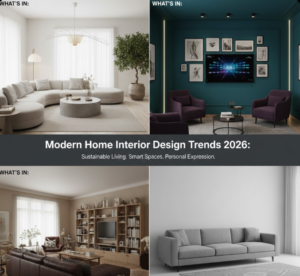
Modern design leans toward neutral palettes. Think whites, warm grays, soft beiges, and earthy tones. These colors create a clean backdrop that makes everything else in the room pop.
Some popular modern color combinations include:
- White + warm wood tones — classic and timeless
- Charcoal gray + white accents — sleek and sophisticated
- Warm beige + black details — cozy but modern
- Sage green + natural textures — fresh and calming
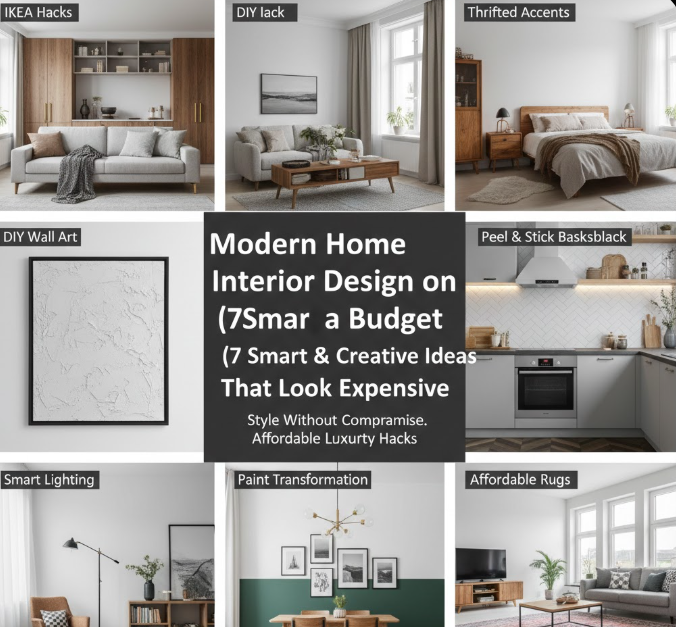
One powerful trick is the accent wall. Instead of painting the whole room, paint one wall in a bold or deep color. This adds visual interest without overwhelming the space — and saves paint costs too.
Don’t Forget the Ceiling
Painting the ceiling a shade lighter than the walls makes the room feel taller. It is a designer trick most people overlook, and it costs almost nothing extra.
Furniture Choices That Look High-End on a Low Budget
Furniture is often where budgets go off track. The good news is that modern design actually favors simple, streamlined pieces — which are often more affordable than ornate, traditional furniture.
Buy Secondhand and Thrift With Confidence
Thrift stores, Facebook Marketplace, Craigslist, and local estate sales are goldmines for budget decorators. Modern style is all about clean shapes, so a plain wooden chair or a simple sofa from a thrift store can be painted, reupholstered, or styled to look completely on-trend.
Look for pieces with solid frames, even if the upholstery is worn. Reupholstering a chair can cost as little as $50 if you do it yourself.
Invest in Key Pieces, Save on the Rest
Not everything needs to be budget furniture. In fact, one well-made piece can elevate an entire room. Focus your spending on high-touch, high-visibility items like:
- The main sofa
- The dining table
- The bed frame
Then save on lower-priority items like side tables, shelving, and decorative accessories.
Multi-Functional Furniture Is a Budget Superpower
In modern interiors, furniture that serves more than one purpose is not just trendy — it is smart. Look for:
- Ottomans with hidden storage
- Sofa beds for guest rooms
- Extendable dining tables
- Beds with built-in drawers
These pieces reduce clutter, eliminate the need for extra furniture, and keep your space looking clean and intentional.
Lighting Changes Everything — And Does Not Have to Cost Much
Lighting is one of the most underrated tools in interior design. It affects how colors look, how large a space feels, and the overall mood of a room. Yet most people treat it as an afterthought.
Layer Your Lighting Like a Pro
Professional designers use three types of lighting in every room:
| Lighting Type | Purpose | Budget Option |
|---|---|---|
| Ambient | General room illumination | Ceiling fixtures, LED bulbs |
| Task | Focused light for activities | Desk lamps, under-cabinet lights |
| Accent | Highlights features or decor | String lights, LED strips, wall sconces |
Using all three layers makes your space feel richer and more intentional — without requiring expensive fixtures.
Swap Out Bulbs for an Instant Upgrade
Warm-white LED bulbs (around 2700K–3000K color temperature) make rooms feel cozy and inviting. Cool white bulbs can feel harsh and clinical. Simply changing your bulbs can dramatically improve how a room feels — and LEDs save money on energy bills too.
DIY Light Fixtures on a Budget
Pendant lights and chandeliers do not have to be expensive. Paper lanterns, basket-weave pendants, and Edison bulb kits are all widely available for under $30 and look stunning in modern spaces.
Rugs, Textiles, and Texture: The Secret to Warmth
A common mistake in budget decorating is focusing only on big furniture pieces and ignoring textiles. Rugs, throw pillows, curtains, and blankets add texture, warmth, and personality to a modern space — often at very low cost.
How to Use a Rug to Define a Space
In open-plan modern homes, rugs help define different zones — a living area, a dining area, a reading nook. The rule of thumb is that your rug should be large enough for the front legs of all furniture to rest on it. This anchors the space and makes it feel intentional.
Budget rugs from IKEA, Wayfair, or Ruggable offer great style at accessible prices. Look for geometric patterns, solid neutrals, or simple texture — all consistent with modern design.
Curtains Make Rooms Look Taller and More Expensive
Here is a tip most people do not know: hang your curtain rod close to the ceiling, not just above the window. Then use floor-length curtains. This makes the ceiling feel taller and the room feel grander — without spending much money at all.
Solid-colored curtains in white, linen, or gray are affordable and always work well in modern interiors.
DIY Wall Decor That Looks Designer
Walls are often the most neglected part of a room. Bare walls make a space feel unfinished. But you do not need expensive art to fill them well.
Gallery Walls on a Shoestring
A gallery wall is a collection of framed images arranged together. You can fill it with:
- Printed photos from your phone (printed at a pharmacy or online)
- Free downloadable art from sites like Unsplash or Printify
- Pages from old books or magazines
- Kids’ artwork (genuinely charming in the right frames)
Matching frames from a dollar store or thrift shop unify the look. Spray paint them all the same color for a cohesive, polished feel.
Mirrors: A Designer’s Best Friend
Mirrors reflect light and make rooms feel larger. A large, simple mirror is one of the best investments you can make for a modern space. You can find oversized mirrors at IKEA for under $50, and thrifted mirrors can be updated with a coat of spray paint.
Floating Shelves for Style and Storage
Floating shelves serve double duty — they are both decorative and functional. Use them to display plants, books, candles, and small art pieces. Styled well, they look like something from a high-end showroom but cost very little.
Plants Bring Any Modern Space to Life
Indoor plants are one of the most affordable and effective ways to bring life, color, and freshness into a modern home. They add a natural texture that balances the clean, minimal look of modern design.
Best Low-Maintenance Plants for Modern Interiors
| Plant | Light Needed | Why It Works |
|---|---|---|
| Snake Plant | Low to medium | Architectural shape, very easy to care for |
| Pothos | Low to medium | Trailing vines add softness and movement |
| ZZ Plant | Low | Glossy leaves, nearly indestructible |
| Rubber Plant | Medium to bright | Bold leaves, modern and sculptural |
| Peace Lily | Low | White flowers, elegant and simple |
You can propagate many of these plants from cuttings — meaning you can get new plants for free from friends or neighbors.
Styling Plants for Maximum Impact
Do not just place a plant on the floor and call it done. Think about height variation. Use tall plants on the floor, medium plants on shelves, and small plants on tables or windowsills. This creates a layered, lush effect that feels intentional and designed.
Smart Shopping Strategies for Budget Interior Design
Knowing where to shop is just as important as knowing what to buy. The best deals are out there — you just need to know where to look.
Where to Find Budget-Friendly Modern Decor
- IKEA — Affordable, modern basics that are easy to customize
- Target (Threshold and Studio McGee lines) — Stylish pieces at accessible prices
- HomeGoods / TJ Maxx — Discounted designer-adjacent decor
- Facebook Marketplace / Craigslist — Secondhand furniture at steep discounts
- Thrift stores — Unique finds at very low prices
- Amazon — Wide range of affordable modern decor and furniture
Shop End-of-Season Sales
Furniture and decor go on sale at the end of each season. Plan ahead and shop during these windows to get 30–50% off regular prices. The best times to shop are typically January (post-holiday clearance), July (summer clearance), and November (Black Friday sales).
For more curated inspiration and room-by-room ideas, check out Inspirations for Interiors — a great resource for practical, beautiful design ideas at every budget level.
Room-by-Room Budget Makeover Guide
Let’s look at how these principles apply to each room in your home.
Living Room Refresh on a Budget
The living room is usually the first priority. Focus on:
- One large, quality sofa (secondhand is fine)
- A statement rug that ties the space together
- A gallery wall or large mirror as a focal point
- Plants for life and color
- Layered lighting with a mix of floor and table lamps
Estimated budget range: $300–$800 for a full refresh, depending on starting point.
Bedroom Transformation Tips
The bedroom should feel calm and restful. Modern bedrooms use a minimal approach — less is more.
- A clean-lined bed frame (IKEA’s MALM or HEMNES are perennial favorites)
- Neutral, high-quality bedding in white or warm tones
- Blackout curtains hung ceiling-high
- A single piece of art or mirror above the bed
Estimated budget range: $200–$600.
Kitchen Updates Without a Full Renovation
You do not need to replace cabinets to modernize a kitchen. Instead:
- Paint cabinet doors in a modern color (white, navy, or dark green)
- Replace hardware with matte black or brushed gold pulls
- Add open shelving for a modern, airy look
- Use a peel-and-stick backsplash tile for an instant upgrade
Estimated budget range: $100–$400 for a dramatic transformation.
Bathroom Glow-Up on the Cheap
Small changes make a huge difference in bathrooms:
- Replace dated light fixtures
- Add a framed mirror
- Swap out towel bars for modern finishes
- Use matching white towels for a spa-like feel
- Add a small plant like a pothos or air plant
Estimated budget range: $50–$200.
Common Mistakes to Avoid in Budget Interior Design
Even with the best intentions, budget decorators often fall into the same traps. Here is what to watch out for.
Buying Too Much Too Fast
Patience is a superpower in interior design. Rushing to fill every empty corner leads to clutter and regret. Live in your space for a few weeks before buying anything. You will make better decisions.
Ignoring Scale and Proportion
A tiny rug under a large sofa looks awkward and cheap. A massive piece of furniture in a small room feels suffocating. Always measure your space and check dimensions before buying.
Skipping the Edit Process
Design is as much about removing things as adding them. Clutter makes even expensive interiors look cheap. Regularly edit your space — remove items that do not serve a purpose or add to the overall look.
Budget Interior Design: Cost vs. Impact Chart
| Upgrade | Average Cost | Visual Impact |
|---|---|---|
| Fresh paint | $30–$80 | ⭐⭐⭐⭐⭐ |
| New throw pillows | $20–$60 | ⭐⭐⭐⭐ |
| Floor-to-ceiling curtains | $30–$100 | ⭐⭐⭐⭐⭐ |
| Large area rug | $50–$200 | ⭐⭐⭐⭐⭐ |
| Indoor plants | $10–$40 | ⭐⭐⭐⭐ |
| Gallery wall | $20–$80 | ⭐⭐⭐⭐ |
| Cabinet hardware swap | $20–$60 | ⭐⭐⭐⭐ |
| Layered lighting | $40–$120 | ⭐⭐⭐⭐⭐ |
| Mirror upgrade | $30–$100 | ⭐⭐⭐⭐ |
As you can see, some of the highest-impact changes are also the least expensive. Prioritize upgrades that give you the most visual bang for your buck.
FAQs About Modern Home Interior Design on a Budget
How do I start modern home interior design with very little money?
Start with what you already have. Rearrange your existing furniture to improve flow and function. Then focus on free or low-cost changes — decluttering, cleaning, adding plants, and changing light bulbs. Once you have a clearer picture of what you need, make targeted purchases.
What is the most affordable way to make a home look modern?
Paint is the most affordable and impactful tool available. A fresh coat of paint in a neutral, modern color can transform a room entirely. After that, focus on clean, minimal styling — remove clutter, choose a consistent color palette, and add simple, intentional decor.
Can IKEA furniture really look high-end?
Absolutely. IKEA furniture is designed with modern aesthetics in mind. The key is in the styling — add quality lighting, layer textures with rugs and pillows, and curate your decor thoughtfully. Many interior designers use IKEA as a base and elevate it with accessories and art. For more ideas, Architectural Digest has a great guide on how to make IKEA furniture look expensive.
What colors are most popular in modern interior design?
Neutral tones dominate modern interiors — whites, warm grays, beiges, and soft taupes. These are often paired with natural textures like wood and linen, and accented with black, deep green, or warm metallics like brass.
How do I make a small room look bigger without spending much?
Use light colors on the walls and ceiling. Hang mirrors to reflect light. Choose furniture with legs (rather than pieces that sit on the floor) to create a sense of space. Use curtains hung from ceiling height. Keep surfaces clutter-free.
Is it possible to do a full home makeover for under $1,000?
Yes — especially if you do most of the work yourself and shop smart. Focus on high-impact, low-cost changes like paint, lighting, and textiles. Use secondhand furniture where possible. Prioritize the rooms you use most. Many people have completely transformed their homes for $500–$800 with patience and creativity.
Bringing It All Together
Modern home interior design is not about how much money you spend. It is about how thoughtfully you make your choices. The principles of modern design — clean lines, intentional styling, functional spaces, and minimal clutter — naturally align with budget-conscious decorating.
Start small. Pick one room, one wall, or even one corner. Apply the ideas in this guide and watch the space transform. Once you see the results of a thoughtful, budget-friendly approach, you will realize that good design was never about the price tag. It was always about the vision.
Your home deserves to look and feel amazing. And with the right approach, it absolutely can — without compromise.