Your Small Bedroom Deserves Better Than You Think
Let’s be real — a small bedroom can feel like a prison cell if you don’t design it right. But here’s the good news: bedroom interior design doesn’t have to be expensive or complicated to make a huge difference. With the right tricks, even the tiniest room can feel open, stylish, and surprisingly spacious.
Millions of people live in apartments, starter homes, or shared spaces where the bedroom is the smallest room in the house. That doesn’t mean you have to settle for cramped and cluttered. In fact, some of the most beautiful bedrooms in the world are also the smallest — because their owners learned how to design smart.
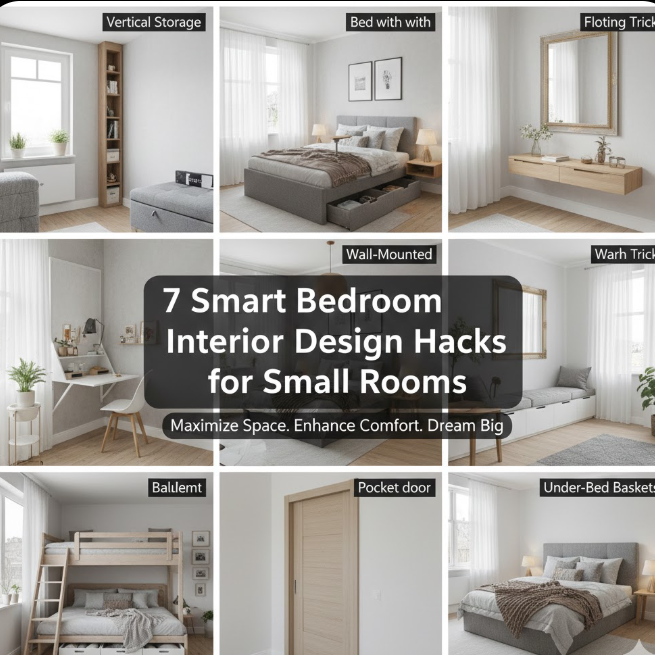
This guide walks you through 7 proven, practical, and creative bedroom interior design hacks that will completely change how your small room looks and feels. Whether you’re a student, a renter, or a homeowner on a budget, these tips are for you.
Why Small Bedroom Design Is Actually a Fun Challenge
Before we jump into the hacks, let’s shift your mindset. A small bedroom isn’t a problem — it’s a design puzzle. And puzzles are fun to solve.
Small rooms force you to think creatively. Every inch matters. Every piece of furniture must earn its spot. That kind of intentional design often results in rooms that feel more personal, more cozy, and more thoughtfully put together than larger rooms that were just randomly filled with stuff.
Plus, decorating a small bedroom usually costs less. You don’t need massive furniture or gallons of paint. Small changes create big results.
So instead of wishing your room were bigger, let’s make it smarter.
Hack #1 — Use Light Colors to Make Walls Disappear
Why Color Is the Most Powerful Design Tool You Have
Color is free. Or at least, it’s cheap. And it might be the single most powerful tool in bedroom interior design when it comes to making a small space feel larger.
Dark colors absorb light and make walls feel closer. Light colors reflect light and push walls back — at least visually. That’s why designers almost always recommend soft, light tones for small bedroom walls.
The best colors for small bedrooms include:
| Color | Effect on Space |
|---|---|
| Soft white | Maximizes light, feels clean and open |
| Light gray | Modern and airy without feeling cold |
| Pale blue | Calming, feels like open sky |
| Blush pink | Warm and cozy without closing in |
| Sage green | Natural feel, relaxing and fresh |
| Cream/off-white | Warmer than white, still opens up space |
Go Monochromatic for Maximum Effect
Here’s a pro tip: paint your walls, ceiling, and even your trim the same color (or very similar shades). This removes visual interruptions and makes the room feel like one continuous, flowing space.
When the eye doesn’t have to stop at a trim line or a ceiling edge, the room feels taller and wider. It’s a simple trick that interior designers use all the time in small bedroom makeovers.
Also, carry your wall color into your bedding and curtains as much as possible. A cohesive palette creates visual calm — and calm feels spacious.
Hack #2 — Ditch the Bulky Bed Frame and Go Low or Floating
How Your Bed Choice Changes Everything
Your bed takes up the most floor space in the room. So the style of your bed frame matters more than you might think. The wrong bed can make a small bedroom feel instantly crowded. The right one makes it feel like a boutique hotel.
Bulky, tall bed frames with thick headboards push the ceiling down visually. They make the room feel smaller. Instead, try these smarter options:
Platform beds sit low to the ground. Because they’re lower, there’s more visual “breathing room” between the top of the bed and the ceiling. The room feels taller.
Wall-mounted floating beds take it even further. They lift off the floor entirely, which means you can see the floor under the bed. Visible floor = more perceived space. It’s one of the most stylish trends in modern small-bedroom design.
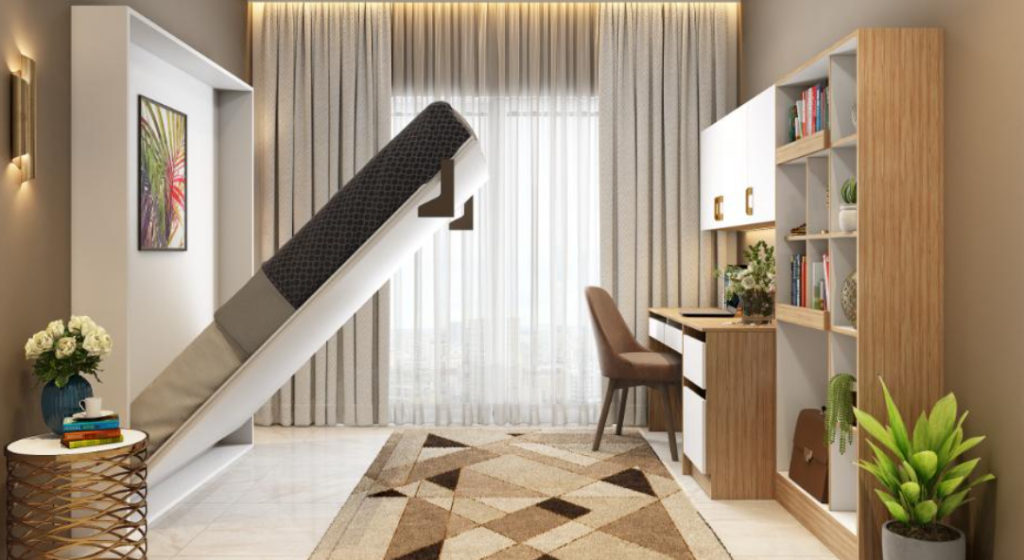
Murphy beds (wall beds) fold up into the wall when not in use. During the day, your bedroom becomes a living space, a workspace, or whatever you need. At night, you pull down the bed and sleep. If your room is truly tiny, this might be the ultimate solution.
Don’t Forget Under-Bed Storage
If you go with a platform bed or a low-profile frame, look for one with built-in storage drawers underneath. That space is golden. You can store extra bedding, seasonal clothes, shoes, or anything else that would normally clutter up your closet or floor.
Hack #3 — Mirrors Are the Secret Weapon of Small Room Design
One Mirror Can Double Your Room (Visually)
This is one of the oldest tricks in interior design — and it still works every time. Mirrors reflect light and reflect the room itself, which creates the illusion of depth and space.
A large mirror on one wall of a small bedroom can literally make the room look twice as big. It bounces natural light around, brightens dark corners, and gives the eye more to look at.
Here’s how to use mirrors effectively in your bedroom interior design:
Full-length wall mirror: Place it on the wall opposite a window. The mirror will reflect the window and outdoor light, flooding the room with brightness.
Mirrored closet doors: If you have sliding closet doors, replace plain panels with mirrored ones. This serves a practical purpose (getting dressed) while also opening up the room visually.
Mirrored furniture: Dressers, nightstands, or accent tables with mirrored surfaces add glamour and reflect light without taking up extra visual space.
Gallery of small mirrors: Can’t afford a large mirror? Hang a collection of smaller mirrors in different shapes and frames. The effect is artistic and functional at the same time.
Hack #4 — Think Vertical: Go Up, Not Out
The Wall Space You’re Probably Wasting
In small bedroom design, most people focus on the floor. They think about where to put the bed, the dresser, the nightstand. But they forget to look up.
Vertical space — the wall space from eye level all the way to the ceiling — is some of the most underused real estate in any small bedroom. Using it wisely can dramatically increase your storage and make the room feel more intentional and designed.
Here are smart ways to go vertical:
Tall bookshelves or shelving units: Instead of wide and low, go narrow and tall. A floor-to-ceiling shelf unit stores tons of stuff while barely eating into your floor space.
Wall-mounted shelves above the bed: The space above your headboard is usually empty. Add a few floating shelves up there for books, plants, or décor items. It draws the eye upward and adds personality.
Hanging plants: Ceiling-mounted or wall-mounted plant hooks bring life into the room without using any surface or floor space.
Vertical wall art: Tall, narrow art pieces or a vertical arrangement of framed photos guide the eye upward, making ceilings feel higher.
Tall Curtains Are a Game Changer
Here’s one of the most underrated tricks in bedroom interior design: hang your curtains as high as possible — ideally right at the ceiling — and let them fall all the way to the floor. Even if your windows are small, floor-to-ceiling curtains make the windows (and the room) appear much taller. It’s a simple, affordable trick with a dramatic effect.
Hack #5 — Smart Furniture Choices That Work Double (or Triple) Duty
Every Piece of Furniture Must Earn Its Place
In a small bedroom, you simply can’t afford furniture that does just one thing. A dresser that’s only a dresser, a nightstand that’s only a nightstand — in a small room, that’s wasted potential.
Instead, look for furniture that multitasks. Here are some excellent examples:
| Furniture Piece | Primary Use | Secondary Use |
|---|---|---|
| Ottoman with storage | Seating / foot rest | Blanket and pillow storage |
| Nightstand with drawers | Bedside surface | Book, charger, personal item storage |
| Desk with shelving unit | Workspace | Display and storage space |
| Bench at foot of bed | Seating | Hidden storage inside |
| Fold-down wall desk | Workspace | Folds flat when not in use |
| Ladder shelf | Display unit | Holds books, plants, accessories |
Choose Furniture That Fits the Scale of the Room
Big, chunky sofas and oversized dressers belong in big rooms. In a small bedroom, scale matters. Choose furniture that’s proportional to the space.
A slimline dresser does the same job as a wide one but takes up less floor space. A compact armchair fits better than a loveseat. A small round mirror feels lighter than a large square one.
When shopping for bedroom furniture, always measure your room first. Know your dimensions. Never buy anything without checking if it’ll actually fit — and still leave enough walking space around it.
For more smart furniture and layout ideas, check out Inspirations for Interiors — a great resource for practical and stylish home design tips.
Hack #6 — Lighting Tricks That Instantly Upgrade the Whole Room
Bad Lighting Makes Small Rooms Feel Even Smaller
Lighting is one of the most underestimated elements of bedroom interior design. A single overhead light in the middle of the ceiling does a poor job of illuminating a small room. It creates flat, unflattering light that makes the space feel dull and, yes, smaller.
Layered lighting is the solution. This means using different types of light at different heights and in different spots around the room.
Here’s a simple breakdown of layered lighting:
Ambient lighting is your main source of general light. Instead of one ceiling fixture, try recessed lighting or a ceiling light with a warm-toned bulb. Warm light (2700K–3000K color temperature) makes a room feel cozy and inviting.
Task lighting is for specific activities. A small lamp on your nightstand is task lighting for reading. A desk lamp is task lighting for working or studying.
Accent lighting is decorative and adds depth. Think LED strip lights behind your headboard, fairy lights along a shelf, or a small lamp in a corner. These lights create visual layers and make the room feel more interesting.
Use Wall Sconces Instead of Table Lamps
Here’s a space-saving tip: replace bedside table lamps with wall-mounted sconces. They free up your nightstand surface completely and look incredibly modern and intentional. You can plug them in or hardwire them, depending on your setup.
According to the American Lighting Association, layered lighting improves both function and mood in residential spaces — especially smaller rooms where every design decision counts.
Hack #7 — Declutter and Organize Like a Pro
Clutter Is the Biggest Enemy of a Small Bedroom
You can apply every single hack in this article, but if your bedroom is cluttered, it will still feel small. Clutter is visual noise. It confuses the eye, creates stress, and makes even a well-designed room feel chaotic.
Decluttering isn’t about being a minimalist or throwing everything away. It’s about keeping only what serves you in that space — and finding smart homes for everything else.
Here’s a simple process to declutter your bedroom:
Step 1 — Take everything out. Yes, everything. Clear every surface, every shelf, every drawer.
Step 2 — Sort into three piles: Keep, Donate/Sell, Trash.
Step 3 — Only put back what you actually use. If you haven’t touched it in six months, it probably doesn’t need to live in your bedroom.
Step 4 — Assign a home for everything. Every item that stays needs a specific place. When everything has a home, it’s easy to keep the room tidy.
Hidden Storage Ideas for Small Bedrooms
Once you’ve decluttered, smart storage keeps things organized. Here are some great ideas:
Over-the-door organizers hang on the back of your bedroom or closet door and hold shoes, accessories, books, or cleaning supplies.
Under-bed storage bins (with lids) keep seasonal items dust-free and out of sight.
Built-in wall niches are a more permanent solution — recessed shelves built into the wall that don’t stick out into the room at all.
Drawer dividers keep dresser drawers neat so you can actually find what you’re looking for.
Baskets and bins on shelves corral small items and make shelves look intentional rather than messy.
Quick Comparison: Before vs. After These Hacks
| Design Element | Before the Hacks | After the Hacks |
|---|---|---|
| Wall color | Dark, absorbs light | Light, reflects light |
| Bed frame | Bulky, tall, no storage | Low-profile with under-bed drawers |
| Mirrors | None or small | Large mirror opposite window |
| Wall space | Empty above eye level | Shelves, art, plants going vertical |
| Furniture | Single-purpose pieces | Multifunctional, right-sized pieces |
| Lighting | One flat overhead light | Layered: ambient + task + accent |
| Storage | Random, cluttered | Organized with hidden systems |
Putting It All Together: A Sample Small Bedroom Layout
Imagine a 10×12 foot bedroom. Here’s how you’d apply all 7 hacks:
Walls: Painted in soft warm white with a monochromatic ceiling. Floor-to-ceiling curtains in a matching cream tone frame a small window.
Bed: A low-profile platform bed with two storage drawers on each side. Pushed against the wall to maximize floor space.
Mirrors: A large full-length mirror mounted on the wall opposite the window. Mirrored closet doors on the built-in wardrobe.
Vertical space: Two floating shelves above the bed hold books and a small plant. A tall, narrow bookshelf in the corner reaches nearly to the ceiling.
Furniture: A compact nightstand with two drawers. A fold-down wall desk that collapses flat during the day. A storage ottoman at the foot of the bed.
Lighting: Warm recessed lights in the ceiling. Two wall-mounted sconces on either side of the bed. LED strip lights behind the headboard for a soft ambient glow.
Storage: An over-the-door organizer on the back of the closet door. Under-bed bins for seasonal items. Drawer dividers in every dresser drawer.
The result? A room that feels twice its actual size — organized, calm, and beautiful.
FAQs About Bedroom Interior Design for Small Rooms
What is the best color for a small bedroom?
Light, neutral colors work best. Soft white, light gray, pale blue, and blush pink are all great choices. They reflect light and make the room feel more open. Avoid dark colors on all four walls unless you’re going for a moody, intentional aesthetic and balance it with lots of lighting.
How do I make a small bedroom look luxurious?
Focus on quality over quantity. Use layered lighting, cohesive colors, and a few statement pieces rather than filling the room with lots of furniture. Clean lines, soft textures, and good organization make a small bedroom feel high-end without a big budget.
Is it okay to put a large bed in a small bedroom?
It depends on the room. A king-sized bed in a 10×10 room will leave almost no floor space. If you love a larger bed, go with a low-profile frame to minimize visual bulk, and choose a design with built-in storage underneath to compensate for lost space.
How do I create storage in a small bedroom with no closet?
Go vertical. Use tall wardrobes, wall-mounted shelves, and over-the-door organizers. Furniture with hidden storage (like ottomans, beds with drawers, and benches with lids) is also essential. Under-bed storage is another great option.
Does bedroom interior design have to be expensive?
Not at all. Some of the most impactful changes — like repainting walls, rearranging furniture, adding mirrors, or decluttering — cost very little or nothing. You don’t need a designer or a huge budget to transform a small bedroom. Smart choices matter more than expensive ones.
Can plants work in a small bedroom?
Yes! Plants add life and color without taking up much space. Choose small plants for shelves or nightstands, or use hanging planters to bring greenery in without using floor space. Just make sure your plants get enough light.
How often should I redesign or refresh my small bedroom?
There’s no set rule. A full redesign every few years is common, but small refreshes — like swapping out pillow covers, rearranging décor, or adding a new lamp — can keep the space feeling fresh more often without major effort or cost.
The Bottom Line on Small Bedroom Interior Design
Small bedrooms are not a design death sentence. They’re an opportunity to be creative, intentional, and smart about every single choice you make.
By using these 7 bedroom interior design hacks — light colors, low-profile beds, strategic mirrors, vertical space, multifunctional furniture, layered lighting, and smart organization — you can completely transform how your room looks, feels, and functions.
You don’t have to live with cramped and cluttered. You just have to design with purpose.
Start with one hack. See the difference. Then add another. Before long, your small bedroom will feel like the most thoughtfully designed room in your entire home.
Found this helpful? Share it with someone whose bedroom could use a smart upgrade.