
Your Bedroom Deserves to Feel Like a Getaway
Think about the best sleep you’ve ever had. Chances are, the room felt calm, soft, and just right. That’s exactly what great bedroom interior design can do for you. It transforms a plain room into a place you actually want to spend time in.
Your bedroom isn’t just where you sleep. It’s where you recharge, relax, and reset after a long day. So it makes sense to put some thought into how it looks and feels.
The good news? You don’t need a huge budget or a professional decorator. With the right ideas and a little creativity, you can design a bedroom that feels warm, welcoming, and completely yours.
In this article, we’ll walk through 8 practical and beautiful bedroom interior design ideas that work for different styles, spaces, and budgets. Whether you prefer a cozy rustic vibe or a sleek modern look, there’s something here for you.
Why Bedroom Design Matters More Than You Think
Most people spend about 7–9 hours in their bedroom every night. Add in time for reading, relaxing, or scrolling your phone, and that number gets even bigger.
A poorly designed bedroom can make it harder to fall asleep, feel more stressed, and even affect your mood during the day. On the flip side, a thoughtfully designed space can improve your sleep quality and help you feel more at ease.
Here’s a quick comparison to show how much design choices matter:
| Design Element | Poor Choice | Smart Choice |
|---|---|---|
| Lighting | Harsh white overhead light | Warm, dimmable lamps |
| Color | Bright red or neon tones | Soft neutrals or muted blues |
| Clutter | No storage, stuff everywhere | Hidden storage, organized space |
| Bedding | Mismatched, rough fabric | Layered, soft textures |
| Furniture | Too big for the room | Scaled to the room size |
As you can see, small changes can make a huge difference. Let’s get into the ideas.
1. Start With the Right Color Palette for Your Bedroom
Color is one of the most powerful tools in bedroom interior design. It sets the mood before you even touch a pillow.
Soft and Calming Colors Work Best
Warm neutrals like beige, cream, taupe, and soft gray are popular for a reason. They feel calm and timeless. Muted blues and greens also work well because they’re linked to relaxation and nature.
Avoid very bright or dark colors on all four walls unless you know what you’re doing. A bold color on one accent wall, though, can look stunning without overwhelming the space.
Try a Two-Tone Color Scheme
Pick one base color for the walls and one slightly deeper shade for an accent wall or the area behind your headboard. This adds depth and makes the room feel intentional without being too busy.
Pro tip: Test paint samples on your wall and look at them at different times of day. Natural light and artificial light change how colors look.
Colors and Their Mood Effects
| Color | Mood It Creates |
|---|---|
| Soft blue | Calm, sleepy, peaceful |
| Warm beige | Cozy, grounded, neutral |
| Sage green | Fresh, relaxing, natural |
| Dusty pink | Soft, romantic, warm |
| Charcoal gray | Modern, moody, sophisticated |
2. Build Your Comfort Zone Around the Bed
The bed is the center of every bedroom. Everything else in the room should support it — not compete with it.
Choose the Right Bed Frame
Your bed frame sets the tone for the whole room. A wood frame with a natural finish feels rustic and warm. An upholstered headboard in velvet or linen feels soft and luxurious. A low platform bed gives a modern, minimal look.
Match the frame style to the overall vibe you’re going for. Don’t just pick what’s on sale — pick what fits your vision.
Layer Your Bedding Like a Pro
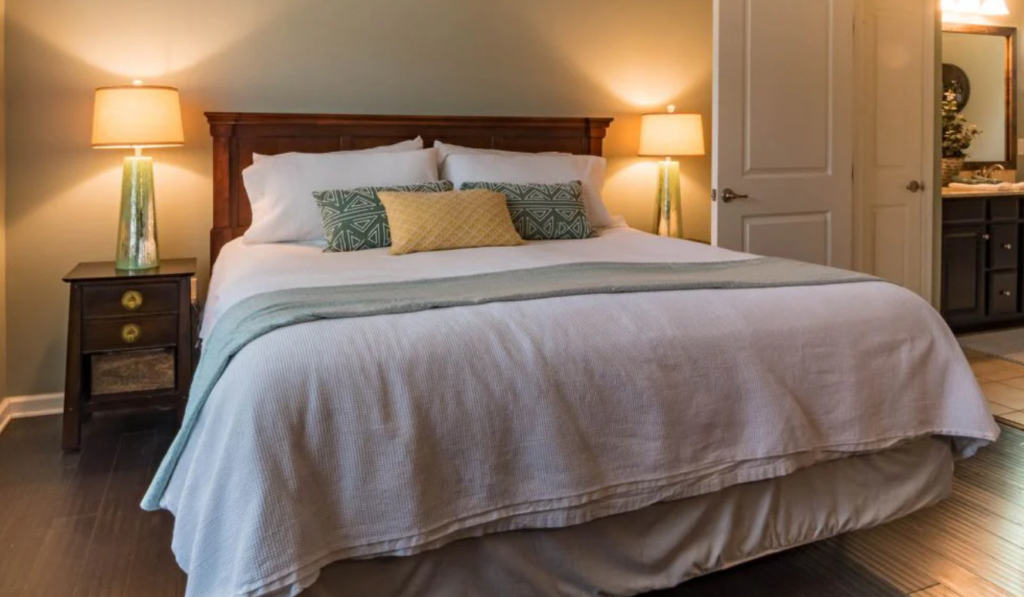
Layering is one of the oldest tricks in bedroom design, and it still works beautifully. Start with a fitted sheet, add a flat sheet, then a duvet or comforter, and finally a throw blanket at the foot of the bed. Toss in two or three decorative pillows in front of your sleeping pillows.
Use textures that contrast a little — think smooth cotton with a chunky knit throw, or crisp linen with a velvet pillow. The mix of textures adds visual interest and makes the bed look like something from a hotel or magazine.
Don’t Forget Pillow Arrangement
A simple but effective setup: two large Euro pillows in back, two standard sleeping pillows in the middle, and one or two smaller accent pillows up front. This looks full and inviting without going overboard.
3. Get the Lighting Just Right
Lighting can make or break a bedroom. Bad lighting makes the room feel cold and hospital-like. Good lighting makes it feel warm and inviting.
Use Layers of Light
The best bedroom interior design setups use at least three types of lighting:
Ambient lighting — the main source of light in the room. This could be a ceiling fixture or recessed lights. Keep it soft and warm.
Task lighting — focused light for reading or working. Bedside lamps or wall-mounted sconces work great here.
Accent lighting — decorative lighting that adds atmosphere. Think LED strip lights behind the headboard, fairy lights along the ceiling, or a small lamp on a dresser.
Dimmer Switches Are a Game Changer
Installing a dimmer switch is one of the easiest upgrades you can make. Being able to lower the lights in the evening signals your brain that it’s time to wind down, which actually helps you fall asleep faster.
Warm vs. Cool Light Bulbs
Always choose warm white bulbs (2700K–3000K) for bedrooms. Cool white or daylight bulbs are energizing — great for a kitchen or office, but not ideal for a space meant for rest.
4. Smart Storage Solutions That Don’t Ruin the Look
Clutter is the enemy of a cozy bedroom. But storage doesn’t have to be ugly or obvious.
Under-Bed Storage Is Underrated
Most people waste the space under their beds. Bed frames with built-in drawers are ideal for extra linens, seasonal clothes, or shoes. If your frame doesn’t have drawers, use flat storage bins with lids. They slide in and out easily and keep things organized.
Built-In Shelving Adds Character
Floating shelves on either side of the bed serve double duty. They act as nightstands and give you space to display books, plants, or candles. This is a great space-saving option for smaller rooms.
Hidden Storage in Ottomans and Benches
A storage ottoman at the foot of the bed looks stylish and holds extra throw blankets, pillows, or accessories. It’s functional furniture that earns its place in the room.
Closet Organization Matters Too
Even if your closet is off to the side, a well-organized closet reduces stress. Use matching hangers, add dividers for shelves, and keep the floor clear. A calm closet contributes to a calm room.
5. Bring Nature Indoors With Plants and Natural Materials
One of the biggest trends in modern bedroom interior design is the use of natural elements. And for good reason — nature has a proven calming effect on the mind.
Best Plants for the Bedroom
Not all plants are ideal for bedrooms, but several work really well:
| Plant | Why It Works |
|---|---|
| Snake plant | Low maintenance, purifies air |
| Pothos | Easy to care for, trails beautifully |
| Peace lily | Loves low light, adds elegance |
| Lavender | Calming scent, pretty look |
| ZZ plant | Nearly indestructible, looks great |
Place plants on nightstands, windowsills, or floating shelves. Even one or two plants can make the room feel more alive and fresh.
Use Natural Materials in Furniture and Decor
Wood, rattan, linen, cotton, jute, and stone all bring natural warmth into the room. A wooden nightstand, a rattan mirror frame, or a jute rug underfoot can transform the feel of a space without requiring a full renovation.
Try mixing materials. Pair a smooth wooden dresser with a textured linen throw. Combine a woven wall basket with a sleek modern lamp. The contrast makes the room feel layered and intentional.
6. Personalize the Space With Meaningful Decor
A truly cozy bedroom feels like your space — not a showroom. Personal touches make all the difference.
Artwork That Speaks to You
Art doesn’t have to be expensive. A framed print of your favorite quote, a painting you made yourself, a photograph from a trip you loved — all of these work perfectly. Choose pieces that make you feel something when you look at them.
Gallery walls are popular and can be done on any budget. Mix frames in similar tones (like all black or all natural wood) for a cohesive look, even if the artwork itself varies.
Textiles That Reflect Your Personality
Curtains, rugs, and throw pillows are easy to swap out as your taste evolves. They’re also some of the most impactful things in a room for very little cost.
A large area rug anchors the space and makes the room feel intentional. Choose one that extends at least 18 inches on either side of the bed so it feels generous, not stingy.
Curtains should ideally go from ceiling to floor. This makes ceilings look higher and the room feel more elegant. Choose light-filtering fabric for daytime softness and blackout curtains if you’re a sensitive sleeper.
A Reading Nook or Cozy Corner
If you have space, designate a small corner just for relaxing. Add a comfortable chair, a floor lamp, a small side table, and a few books. This gives the room a second purpose and makes it feel like a real retreat — not just a place to sleep.
7. Work With Room Size, Not Against It
Many people think small bedrooms can’t look good. That’s simply not true. Good bedroom interior design works with the space you have — not against it.
Small Bedroom Design Tips
Keep the color palette light. Pale walls reflect more light and make rooms feel bigger. Use mirrors strategically — a large mirror on one wall can visually double the space. Choose furniture with legs rather than pieces that sit on the floor. The visible floor space makes the room feel more open.
Avoid using too many large pieces. One or two statement items are better than filling every corner.
Large Bedroom Design Tips
Large rooms need to feel cozy, not empty. Use a large rug to anchor the furniture. Create zones — a sleeping area, a sitting area, maybe a small workspace. A bedroom that’s too sparse feels cold and impersonal.
Use furniture to fill the space purposefully. A bench at the foot of the bed, an armchair in the corner, and a proper dresser all help a larger room feel complete.
Medium Bedroom: The Sweet Spot
Most bedrooms are medium-sized, and they offer the most flexibility. You can play with bolder colors, bigger furniture, and more decor without the room feeling crowded or empty. Focus on balance — equal weight on both sides of the bed, matched nightstands, and proportional furniture.
8. Add Scent, Sound, and Texture for a Full Sensory Experience
The best bedroom interior design doesn’t just look good — it feels good in every way.
Scent Sets the Mood
Our sense of smell is directly connected to emotion and memory. A bedroom that smells good instantly feels cozier. Try a reed diffuser with lavender or vanilla, a scented candle (used safely), or linen spray on your pillows before bed.
Keep it subtle. You want a gentle background scent, not something that hits you the moment you walk in.
Sound Matters More Than You’d Expect
Hard surfaces reflect sound and make rooms feel echoey and cold. Soft surfaces — rugs, curtains, upholstered furniture, throw pillows, fabric wall hangings — absorb sound and make the room feel quieter and more intimate.
If you live somewhere noisy, a white noise machine or a small fan can help create a consistent background sound that masks disturbances and helps you sleep.
Texture Is What You Feel
Touch is part of the bedroom experience too. Run your hand along a velvet pillow, sink your toes into a thick rug, or wrap yourself in a soft weighted blanket. These physical sensations contribute to the feeling of comfort just as much as what you see.
Mix textures throughout the room — smooth, rough, soft, woven, plush — to create a space that feels rich and layered.
Quick Reference: 8 Bedroom Design Ideas at a Glance
| # | Idea | Key Focus |
|---|---|---|
| 1 | Color palette | Calm, soothing tones |
| 2 | Bed setup | Frame, bedding, layering |
| 3 | Lighting | Layered, warm, dimmable |
| 4 | Storage | Hidden, smart, clutter-free |
| 5 | Nature | Plants, wood, natural materials |
| 6 | Personal decor | Art, textiles, cozy corners |
| 7 | Room size | Work with your space |
| 8 | Sensory design | Scent, sound, texture |
Where to Find More Bedroom Inspiration
If you’re looking for more ideas to bring your vision to life, Inspirations for Interiors is a great resource packed with real-home inspiration, styling tips, and design guides for every room in the house.
For additional research-backed sleep and design tips, the Sleep Foundation offers science-supported insights on how your bedroom environment directly impacts your rest and overall health.
FAQs About Bedroom Interior Design
Q: What is the most important element of bedroom interior design? The bed is the focal point, but lighting and color have the biggest impact on how a room feels. Getting those two right makes everything else easier.
Q: How do I make a small bedroom look bigger? Use light colors on the walls, add mirrors, choose furniture with legs, and keep clutter to a minimum. Vertical stripes in curtains or wallpaper also draw the eye upward, making the ceiling feel higher.
Q: What colors are best for a bedroom? Soft neutrals like beige, cream, and warm gray are classic choices. Muted blues, sage greens, and dusty pinks also work well. Avoid very bright or saturated colors unless used sparingly as accents.
Q: Can I do a full bedroom redesign on a budget? Yes. Focus on the high-impact, low-cost changes first: a fresh coat of paint, new bedding, better lighting, and some rearranged furniture. These changes alone can transform a room without spending a lot.
Q: How many pillows should be on a bed? For a queen or king bed, 2 sleeping pillows, 2 Euro pillows, and 1–3 decorative pillows is a good starting point. Adjust based on your personal preference and how much you like the layered look.
Q: What type of rug works best under a bed? A large area rug that extends at least 18–24 inches beyond the sides of the bed works best. It anchors the space and makes the room feel more finished. Choose a soft, plush material for comfort underfoot.
Q: Do I need to hire an interior designer to redesign my bedroom? Not at all. Many people achieve beautiful results on their own using online inspiration, careful planning, and a clear vision of what they want. Interior design apps and mood boards can also help you plan before you buy anything.
Q: How often should I update my bedroom design? There’s no set rule. Many people do a light refresh every few years — new bedding, updated decor, maybe a new rug. A full renovation might happen every 7–10 years or when your lifestyle changes significantly.
Your Cozy Retreat Is Closer Than You Think
Redesigning your bedroom doesn’t have to be overwhelming. Start small. Pick one idea from this list and begin there. Maybe it’s finally buying those linen curtains you’ve been eyeing, or swapping your harsh overhead light for warm bedside lamps.
Good bedroom interior design is really about intention. It’s about deciding how you want to feel in your space and then making choices that support that feeling. Every paint color, every pillow, every plant is a small step toward a room that genuinely feels like yours.
The goal isn’t perfection. The goal is a bedroom you look forward to coming home to — one that wraps around you like a warm hug at the end of the day.
Take it one step at a time, trust your instincts, and enjoy the process. Your perfect retreat is already within reach.