Kitchen Interior Design: Why Your Layout Is Everything
Good kitchen interior design starts with one thing — layout. Before you pick cabinet colors or countertop materials, you need a plan for how your kitchen will actually work. A poorly planned kitchen wastes your time, energy, and money. A well-planned one makes cooking feel easy and enjoyable.
Think about it. You walk into your kitchen every single day. You cook, clean, store groceries, maybe even eat there. The way your kitchen is laid out directly affects all of that. So getting the layout right is the most important step in any kitchen design project.
In this guide, you’ll learn everything you need to know about kitchen layouts — from the classic work triangle to modern zone-based planning. Whether you’re building a new kitchen or renovating an old one, this guide will help you make smart decisions.
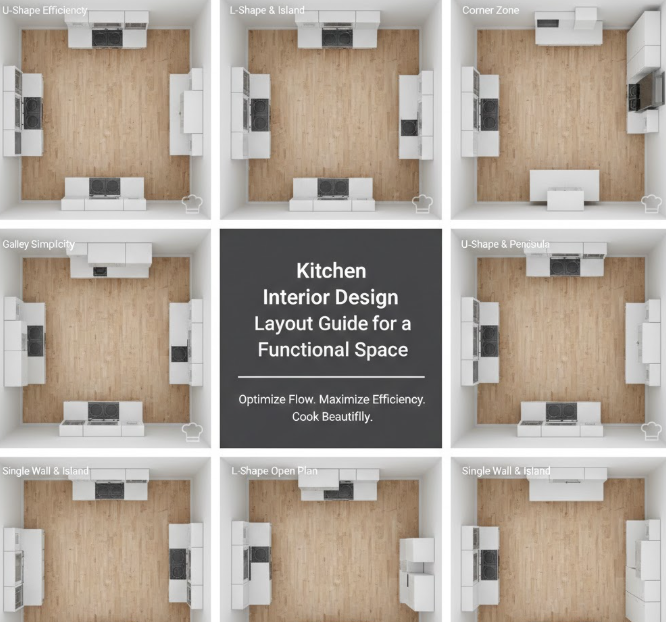
The 6 Most Popular Kitchen Layout Styles
Every kitchen is different. The size of your space, the shape of the room, and how many people use the kitchen all affect which layout works best. Here are the six most common kitchen layout styles used in kitchen interior design today.
1. The Single-Wall Kitchen
This layout lines everything up along one wall. It’s perfect for small apartments or studio spaces where room is tight.
Best for: Small spaces, open-plan living areas Biggest challenge: Limited counter space
2. The Galley Kitchen
A galley kitchen has two parallel counters or walls facing each other. It’s a very efficient design, especially for solo cooks.
Best for: Narrow rooms, professional-style cooking Biggest challenge: Can feel cramped with multiple people
3. The L-Shaped Kitchen
This layout uses two walls at a right angle. It opens up the space and works well in medium-sized rooms.
Best for: Medium spaces, open to dining areas Biggest challenge: Corner storage can be tricky
4. The U-Shaped Kitchen
Three walls of cabinets and counters form a U shape. This gives you tons of workspace and storage.
Best for: Large kitchens, serious home cooks Biggest challenge: Needs enough square footage to avoid feeling closed in
5. The Island Kitchen
An island kitchen adds a freestanding counter in the middle. It can pair with any of the layouts above.
Best for: Open-plan homes, families who cook together Biggest challenge: Requires plenty of floor space around the island
6. The Peninsula Kitchen
Similar to an island, but the counter is attached to a wall on one end. It creates extra workspace without needing as much room.
Best for: Medium to large kitchens with open layouts Biggest challenge: Traffic flow around the peninsula
| Layout Type | Best Room Size | Storage Level | Traffic Flow |
|---|---|---|---|
| Single-Wall | Small | Low | Easy |
| Galley | Narrow/Medium | Medium | Efficient |
| L-Shaped | Medium | Medium-High | Good |
| U-Shaped | Large | High | Excellent |
| Island | Large | High | Open |
| Peninsula | Medium-Large | High | Good |
The Work Triangle: Still the Golden Rule of Kitchen Design
The work triangle is one of the most important concepts in kitchen interior design. It connects your three main work zones — the sink, the stove, and the refrigerator. The idea is simple: these three areas should form a triangle, and each side of the triangle should be between 4 and 9 feet long.
Why does this matter? Because those three spots are where you spend most of your time in the kitchen. You move between them constantly while cooking. The shorter and cleaner the path between them, the easier cooking becomes.
How to Check Your Work Triangle
Add up the three sides of your triangle. The total should fall between 13 and 26 feet. If it’s too small, you’ll feel cramped. If it’s too large, you’ll be walking too much.
Also, try not to have major traffic paths cutting through the triangle. If people keep walking between your stove and sink while you’re cooking, the kitchen becomes chaotic and even unsafe.
Is the Work Triangle Still Relevant?
Yes — but modern kitchens have evolved. Many households now cook with two people at the same time. Open-plan kitchens also change how traffic moves. That’s why designers today often talk about work zones instead of, or alongside, the work triangle.
Work Zones: The Modern Approach to Kitchen Planning
Instead of just thinking about three points, zone-based planning divides the kitchen into activity areas. This approach is especially helpful in large kitchens or families where multiple people cook at once.
The 5 Core Kitchen Work Zones
Zone 1 — Storage Zone This is where your refrigerator, pantry, and dry goods cabinets live. Everything you need to start cooking begins here.
Zone 2 — Prep Zone This is your main counter space. It’s where you chop, mix, and prepare food. Ideally, this zone sits between the storage area and the stove.
Zone 3 — Cooking Zone This includes your stove, oven, and microwave. It needs good ventilation and easy access to the prep zone.
Zone 4 — Cleaning Zone Your sink and dishwasher belong here. Place this zone near the cooking area to make rinsing and cleaning fast and easy.
Zone 5 — Serving Zone This is where you plate food and store dishes. It often connects the kitchen to the dining area.
Smart Storage Solutions That Make Any Layout Work Better
A great kitchen layout means nothing without smart storage. One of the biggest complaints people have about their kitchens is not having enough space. But often, the problem isn’t the size — it’s the storage design.
Maximize Your Cabinets
Don’t stop your upper cabinets before the ceiling. Extending them all the way up gives you extra space for items you don’t use every day. Use the top shelves for seasonal items or large pots.
Pull-Out Drawers and Organizers
Deep cabinets are often wasted space. Pull-out drawers inside lower cabinets let you see everything at once without digging around in the back.
Corner Cabinet Solutions
Corner cabinets are notoriously difficult. Lazy Susans, magic corner pull-outs, and diagonal drawers are all smart ways to make use of this awkward space.
The Kitchen Island as Storage
If your layout includes an island, use the base for storage. Drawers, shelves, and even small appliance garages built into the island can dramatically increase your storage capacity.
Vertical Storage Tricks
Walls are often underused in kitchens. Magnetic knife strips, pegboards, and open shelving on the wall keep tools accessible without taking up counter space.
Kitchen Interior Design and Traffic Flow: Don’t Overlook This
Traffic flow is one of the most underrated parts of kitchen interior design. It refers to how people move through the kitchen during daily use. Poor traffic flow creates frustration, accidents, and a kitchen that just doesn’t feel right.
The 42-Inch Rule
Most kitchen designers follow a simple guideline: leave at least 42 inches of aisle space between counters or islands. For kitchens used by multiple cooks, bump that up to 48 inches.
Where People Move
Think about where people enter and exit the kitchen. Do they walk through the cooking zone to get to the dining table? That’s a problem. Try to route foot traffic around the edges of the work zones, not through the middle.
Islands and Traffic
Islands are fantastic, but they can create traffic jams if placed incorrectly. Make sure there’s comfortable space on all sides. A general rule is to leave at least 3 feet on every side of a freestanding island.
Choosing the Right Materials for Each Kitchen Layout
The layout you choose also affects which materials will work best. Here’s a quick breakdown of how layout impacts material decisions in kitchen interior design.
Countertops
For busy prep zones in U-shaped or island kitchens, go for durable, easy-to-clean materials like quartz or granite. For galley or single-wall kitchens where space is tight, lighter-colored countertops make the room feel bigger.
Flooring
Large tiles work well in spacious kitchen layouts. In narrow galley kitchens, planks running lengthwise visually extend the space. Avoid highly textured flooring near cooking zones — it traps grease and makes cleaning harder.
Cabinet Finishes
Light-colored cabinets open up small spaces. Dark cabinets add drama and warmth to large kitchens. In galley kitchens, consider upper cabinets in a light color and lower cabinets in a darker tone for a balanced look.
Lighting in Kitchen Layout Design
Lighting is often an afterthought, but it’s a crucial part of kitchen interior design. The right lighting plan makes every task easier and the space look better.
Three Layers of Kitchen Lighting
Ambient lighting is your general overhead lighting. It illuminates the whole room.
Task lighting focuses on specific work areas — under-cabinet lights over the prep zone, pendant lights over the island, and recessed lights over the stove.
Accent lighting is decorative. Inside glass cabinets, toe-kick lighting, or strip lights under the island add personality and depth.
Natural Light and Layout
Where your windows sit affects which layout makes sense. In an L-shaped kitchen, you can position the corner near a window to flood your prep zone with natural light. In a galley kitchen, windows at either end of the room bring light deep into the space.
How to Design a Kid-Friendly or Multi-Cook Kitchen
Modern families don’t always have just one person cooking. More and more, kitchens are designed for two cooks, kids helping out, or even home-based baking businesses. Your layout needs to support all of that.
Designing for Two Cooks
If two people regularly cook together, design two separate prep zones on different sides of the kitchen. Give each person access to the sink and enough counter space to work independently.
Making It Safe for Kids
Round the edges of your island. Store sharp knives and heavy appliances in harder-to-reach places. Place low drawers near the island with safe items kids can help with — measuring cups, mixing bowls, napkins.
Creating a Homework or Snack Zone
Many families love having a spot in or near the kitchen for kids to sit, snack, or do homework. A built-in bench at the end of an island or a small breakfast bar works perfectly for this.
Kitchen Design Mistakes to Avoid
Even with the best intentions, many homeowners make common layout mistakes. Here are the ones that show up most often — and how to skip them.
Not Planning Enough Counter Space
Counters fill up fast. Always plan for more than you think you need. At minimum, aim for 24 inches of prep space on at least one side of the stove and 15 inches near the refrigerator.
Ignoring the Ventilation
A beautiful stove hood is great — but a functional one is essential. Poor ventilation fills your home with cooking smells and grease. Make sure your range hood vents to the outside, not just recirculates air.
Placing the Refrigerator Wrong
The fridge is a high-traffic area. Don’t put it at the far end of a deep U-shaped kitchen where it blocks flow. And make sure the door swings open toward the counter, not away from it.
Skipping the Electrical Planning
Think about where you’ll use small appliances — toaster, coffee maker, stand mixer. Plan enough outlets in those spots before construction starts. Adding them later is expensive.
For more kitchen and home interior inspiration, visit Inspirations for Interiors — a great resource for design ideas across every room in the house.
If you want to dig deeper into design principles and theory, the American Institute of Architects (AIA) offers professional resources and guidelines used by designers worldwide.
Open-Plan Kitchens: Layout Tips for Connected Spaces
Open-plan living is hugely popular right now. The kitchen connects to the dining room, living room, or both. This creates a social, airy atmosphere — but it also brings new layout challenges.
Define the Kitchen Without Walls
Use a peninsula or island to visually define the kitchen area. Flooring changes, lighting zones, and ceiling height variations also help create a sense of separation without walls.
Keep Sightlines Clean
In an open kitchen, visual clutter is even more noticeable. Design generous storage so that countertops stay clear. Pull-out trash bins, hidden appliance garages, and deep pantry cabinets all help keep things tidy.
Noise and Smell Management
Without walls, cooking smells and appliance noise travel freely. Invest in a powerful, quiet range hood. Use soft materials like rugs and upholstered bar stools to absorb sound.
Quick-Reference: Kitchen Layout Decision Chart
| You Have This… | Consider This Layout |
|---|---|
| A long, narrow room | Galley |
| One open wall in a studio | Single-Wall |
| A medium room with two walls | L-Shaped |
| A large room with three walls | U-Shaped |
| An open-plan, large home | Island |
| Medium room, want extra workspace | Peninsula |
| Two regular cooks | U-Shaped or Island with two prep zones |
| Small family, occasional cooking | L-Shaped or Galley |
Frequently Asked Questions About Kitchen Interior Design
Q: What is the best kitchen layout for a small space? A: For small spaces, the galley or single-wall layout works best. They maximize efficiency by keeping everything within close reach while using minimal floor space.
Q: How much does it cost to redesign a kitchen layout? A: Costs vary widely. A basic layout refresh with new cabinets and counters can start around $10,000–$15,000. A full renovation with new plumbing and structural changes can run $30,000 or more. Always get multiple quotes.
Q: What is the kitchen work triangle? A: The work triangle connects your three main kitchen workstations — the sink, refrigerator, and stove. Keeping each side between 4 and 9 feet makes cooking more efficient and reduces unnecessary movement.
Q: How do I make a kitchen feel bigger without expanding it? A: Use light-colored cabinets and countertops, add under-cabinet lighting, reduce visual clutter, install larger floor tiles, and consider open shelving instead of upper cabinets in one section.
Q: Is an island worth it in a medium-sized kitchen? A: Only if you have at least 3 feet of clearance around the island. If the space is too tight, a peninsula (attached to a wall) might be a smarter choice that still gives you extra counter and storage space.
Q: How important is ventilation in kitchen design? A: Very important. Good ventilation removes heat, moisture, grease, and cooking odors. It also protects your cabinets and walls from long-term damage. Always choose a range hood that vents to the outside.
Q: Where should the sink be placed in a kitchen? A: Ideally near the dishwasher and within the work triangle. Many designers place it under a window for natural light. It should also be within easy reach of the prep zone.
Putting It All Together: Your Kitchen Layout Action Plan
Now that you’ve covered all the key parts of kitchen interior design, here’s a simple action plan to move forward.
Step 1: Measure your space carefully. Note the location of doors, windows, and existing plumbing and electrical points.
Step 2: Choose your layout style based on room size, shape, and how you cook.
Step 3: Map out your work triangle or work zones on paper or using free online kitchen planning tools.
Step 4: Plan your storage — cabinets, drawers, pantry, and island if applicable.
Step 5: Think about traffic flow. Walk through your design mentally and check for bottlenecks.
Step 6: Plan your lighting in three layers — ambient, task, and accent.
Step 7: Choose your materials with both function and aesthetics in mind.
Step 8: Get professional quotes and start building.
Final Thoughts on Kitchen Interior Design Layouts
A well-planned kitchen isn’t just beautiful — it makes your daily life easier, safer, and more enjoyable. The best kitchen interior design layouts are the ones that fit how you actually live and cook.
There’s no single perfect layout. The right choice depends on your space, your habits, your family size, and your budget. But with the right information and a clear plan, anyone can design a kitchen that truly works.
Start with your layout. Get the bones right. Everything else — the colors, the finishes, the decorative touches — falls into place once your foundation is solid. Take your time, do your research, and don’t rush the planning phase. The kitchen is the heart of the home, and it deserves the thought you put into it.